
The Best Way To Serve Humanity

Photo by RODNAE Productions

Humanity is not just a word; it goes beyond the horizons of human nature and creations. It is about using hearts along with minds.

When we think about how best to serve others, it helps to remember that we can rise to the level we set for ourselves—that whatever service we render ought to be performed to the very best of our abilities. 

While striving for excellence in all we do, the sincerest form of service is offered in a spirit of humility. To be helpful is gratifying, but our efforts to help others should be free from any desire for self-aggrandizement, recognition, or a sense of superiority. Prestige is a notion based on social beliefs, not reality.

Just like Jamie Fry-Pulos’ Servants Heart from the voice of a volunteer book, it underscores the importance of volunteers in the many communities they serve. Here, she unveils the reasons for volunteering, its benefits, and the qualities that would-be volunteers should have. It is a book about being the excellent volunteer that our God Almighty would like you to be by being a servant, being faithful, helping others, being willing to learn something new, working with older and younger people, showing no favoritism, never being afraid to ask questions, and learning when to say NO.

Steps For Effective Service

Our intentions are the one thing in life over which we have complete control, especially when we endeavor to help each other. They are part of a sequence of steps leading to effective service. Here are three (3) efforts to achieve effective service.

#1. Prayer. The first step in any plan for effective service is prayer, for it is always spiritually beneficial to pray and reflect upon the needs of the situation we hope to serve. This helps us to remain selfless in our intentions.

#2. Draw upon your resolve and volition. Volition means your willingness to serve. This brings empowerment and makes your service highly effective. Empowerment from the Divine realm comes when you gladly offer all your expertise to help others. Then these divine transcendental connections will reciprocate by awarding your increased responsibilities. As you notice those who provide excellent service by giving full of themselves, you arrange to give them more complicated, complex duties, promoting and rewarding them because you appreciate their dedication. Also, many people experience hardship and need help. I will tell you that it is essential for you to learn to be relentless. There will be moments when you do not believe there is a solution to your problem. Drawing up your resolve means that you know there is always a solution. Always.

#3. Act to carry out your plan confidently. A well-executed strategy can ensure goal alignment, provide clear focus and objectives, and increase quality service. Projects must be acted out. Otherwise, they will remain a plan without an outcome. Your good works and services will not be materialized and will not be benefitted by those people who need your help if you are not aggressive in implementing them. In short, put your plan into effect. 

Final Remarks

Any work that one does, not just volunteer work, can be pursued with a spirit of service. Any profession, whether seen as prestigious or lowly, merits praise if it exists to serve others. Our intentions, efforts, and achievements are all factors in our service to others. To serve effectively, we need to be pure-hearted in our intentions, diligent in our efforts, and humble in our achievements.

Moreover, as a framework for our intentions and an outline for our service to others, the following excerpt from Baha’i scripture is among the best spiritual advice ever given:

Be thankful in adversity and generous in prosperity. Be worthy of your neighbor’s trust, and look upon him with a friendly and bright face. Be an admonisher to the rich, a treasure to the poor, an answerer of the needy’s cry, and a preserver of the sanctity of your pledge. Be guarded in your speech and fair in your judgment. Be unjust to no man, and show humility to all men. Be a crown to the brow of fidelity, an ornament to the countenance of truth, a pillar of the righteousness’ temple, a breath of life to the body of humankind, an ensign of the justice hosts, a luminary above the virtue’s horizon, a dew to the human heart’s soil, an ark on the ocean of knowledge, a sun in the bounty’s heaven, a gem on the wisdom’s wreath, a shining light in the sky of your generation, fruit upon the tree of humility. – Ibid., p. 285.

Defeating Writer’s Block: Knowing the Enemy of Inspiration

Photo by Andrea Piacquadio

Finding inspiration is the perennial problem all writers have, especially when planning to write a book about short stories and poems. So, how do you rev up that old noggin and get to work?

Are you a writer? Let me know if this isn’t relatable. It’s a quiet afternoon, and you thought it would be a great day of excellent writing. You might have even told yourself you’d go beyond your daily goal and crank out a whole chapter or maybe two. One and a half would be good. But here you are, staring at a blank notebook or Word document. You might have written a few words but didn’t think they were worth anything, so you erased or deleted them. Your confidence is now hanging on by a thread.

The above must seem terribly familiar. Isn’t it?  

Well, every writer has experienced it; that moment where nothing sticks in your mind and gets written down. That moment where you think you’ve nothing else to write about, that you should give up, and that anything else would be shameful, and, dear, you should stop with all this writing nonsense. 

And when I say every writer has been there, I mean every writer, from the humble fanfiction aficionado to the amateur fabulist to the meticulous journalist to the more professional best-seller. 

This dreadful thing is what we call “writer’s block.” It’s terrible to be afflicted by, whiling away the time when you could have been more productive. Still, it’s a normal thing to have. 

Getting over writer’s block takes time, and not everyone has the same way of going about it. But it’s important to note that every writer can get writer’s block. It certainly helps me when I’m in a funk, sitting down and waiting for the words to come out as I try to finish my book about short stories and poems.

Some Causes for Writer’s Block; How the Dragon Grows

Writer’s block can occur from any number of things; it all depends on the person and their hang-ups. Many think writer’s block results from a lack of inspiration, but it’s more complicated than that. The absence of inspiration and motivation can lead to the absence of writing, but self-doubt is a more significant factor.

Self-doubt can lead to apathy, a diminished passion that can easily take root and swallow up whatever creative spark you have in you. This feeling usually comes from being kept back, restricted by the limits of whatever it is writing, be it a comic book, a short story, or a poem.

Self-doubt can also lead to anger—anger at the fact that what you wrote before has become meaningless or that it didn’t get the attention you thought it would. Anger is destructive if not channeled properly and can be a more long-term problem than writer’s block.

Self-doubt is also the root of anxiety. For us writers, we always have to walk the road of uncertainty. We always need clarification on whether we have what it takes and whether our writing even has an audience. We may be just stringing along a sequence of words with no recourse. What is good writing anyway? This question is something writers constantly ask themselves. And it is grating. When do we become good enough?

The worst thing about self-doubt is that you find fault in yourself and your writing and find it in others too. In our feelings of inadequacy, we try to find problems with others to feel better about ourselves, which is not an excellent way to improve ourselves. This distrust in others and yourself eventually leads to not wanting to write, which is sad.

The Solution to Writer’s Block; How to Defeat the Dragon

Although a lack of inspiration is not the only cause of writer’s block, it certainly is a solution! And sometimes, the best method for finding inspiration is through brute force! Not physically hitting someone, mind you, but metaphorically speaking, you must rush in and hope inspiration sticks. A good way is to start writing.

But if you’re writing, have writer’s block, and don’t have inspiration–should you stop just writing then?

NO!

Inspiration is not something that pops in every so often, like a good idea or a bout of flatulence. Inspiration, more often than not, is something you have to search for and discover in your waking moments. You have to let your mind be and follow any impulse that pushes you toward a direction. 

Body Changes When In Outer Space

Photo by Pixabay

We often dream of getting into outer space and enjoying the light effects of zero gravity. But have we thought of what might affect our human body?

For more than 50 years, NASA’s Human Research Program (HRP) has studied what will happen to the human body in space. Researchers use what they learn to design procedures, devices, and strategies to keep astronauts safe and healthy throughout their missions.

NASA engineers use the lessons learned to better design spacecraft and improve the fit and functions of spacesuits. The research also aids in developing and assessing medical standards, physical fitness programs and standards, physiological and psychological adaptation training, sensorimotor training, and nutritional health protocols.

Below are the physical effects on our body when in outer space for some time.

Changes in the metabolic functions of our body. We also need well-balanced diets, but they face some unique challenges caused by differences in how our bodies function in space. You may eat your favorites like M&Ms, candy bars, and beef jerky. But everything must be taken in moderation, of course.

To help ensure delicious menus, the astronauts will do a taste test of the food and select their menus well before blasting off into space. Menu selections allow design meals balanced with the needed vitamins, minerals, and calories.

Bone and muscle weaken. Exercise keeps our hearts healthy, strengthens our muscles and bones, keeps us flexible, and makes us feel better. On Earth, gravity pulls against us when we walk, run, and play ball. It stresses our bones and tells our bone cells to continue to make more bone. However, in space, astronauts float around and do not have to use their muscles nearly as much, and they do not need their bones to help support them. On the Space Station, objects have no weight — and little effort is required to lift things or move around. Walking, standing, and even breathing on Earth require more muscle and bone strength than in space. 

“Space sickness.” On the International Space Station (ISS), or Spacecraft that have flown into space, the force of gravity is much weaker than on the Earth. As a result, many people show symptoms of “space sickness,” such as headaches, nausea, and vomiting. When we are on Earth, we are strongly affected by the force of gravity. We have a small vestibular organ deep inside our ears (in the inner ear) that plays a crucial role in keeping our bodies balanced. This organ converts information on gravity and acceleration experienced by the body into signals and sends them to the brain. While on Earth, the brain always receives gravity information from the vestibular organs and uses it to keep the body balanced. In the low gravity of space, the information received from the vestibular organs changes. This is thought to confuse the brain, leading to space sickness.

The face often swells in space. Blood and other bodily fluids are being pulled by gravity into the lower parts of our bodies. Gravity weakens when you go to space. Thus fluids are no longer pulled down, which results in fluids accumulating in the upper body parts. This is the reason why the face swells in space. The mucous membranes of the nose also swell, so astronauts often have congested noses. If you stay for a while in space, the fluids in your body balance out, and facial swelling typically begins to disappear after a few weeks.

Conversely, a book by Wayne Scott Harral, “Moon Luck,” is a story of astronauts living on the moon. there will likely be one or more active stations permanently located on the moon in the coming decades. And another will inevitably take human life while living in these moon colonies. Will we be prepared for the first time it happens?

Moon Luck is the story of 30 astronauts living on the moon for extended periods. It is also the story of the astronaut scientists and astronaut explorers as they grow plants on the moon, explore and find mineral ores, conduct experiments and research, and develop animosities and close relationships. When one of the base’s senior members dies in what appears to be an accident, the story follows the trail to discover the actual perpetrator, leaving us with the question: Is it murder if it happens on the moon?

After knowing some of the effects of staying in outer space, a question worth answering goes. Are you still dreaming of getting yourself into outer space?

Healing Tools For Attaining Positivity And Inner Peace

Photo by Pixabay

What would you change about your life or yourself in particular? Do you want to be happier? In better shape? Be in less pain? 

What do you think about making these changes? And, more importantly, how do you make them last so that you do not have to keep putting effort into maintaining the changes in place? That is where the Tools of Healing come in. 

The closer you get to the escape hatch into the peace of mind, the ego will start to roar, calling its horn of thunder to fill the mind with upsets. It will try to distract you from the love in your heart and the awareness of who You Truly Are. It may seem that you are going in the opposite direction, but at that exact moment when we can hardly look, talk or write about the upset, we have the best chance of digging out the core beliefs underneath and seeing the false as false. 

In moments like this, one needs healing tools that pull these dark and heavy logs from the mind asap. These healing tools help expose and release faulty assumptions, emotions, and limiting thoughts and beliefs in the mind. What has been keeping you imprisoned for years or even lifetimes can now easily be let go off! 

  1. The first tool is faith. We know that faith is a loaded word nowadays. But the believer uses faith more like Webster does 1. confidence or trust. 2. a belief that is not based on proof. The believer is also okay with faith having a religious or spiritual connotation. We see the believer using faith as a foundation. All else is built upon it. Everything we think we know as facts are seated on a foundation of faith.

2. Acceptance. Fully accept the truth of your present moment. Release yourself into that truth. Let go. It is what it is. Fully admit the truth of your present moment, the raw, naked, unadulterated truth. You shall know your truth, and the truth shall set you free. This is one of the most powerful concepts in healing. If you want to be free of a particular sickness, you must work with the truth of it. Denial, repression, resistance, rationalizations, spins, and fantasies do not work. 

3. Compassion. Our inner self constantly guides us to have compassion for whatever it is. We often call understanding “the Alchemist” because it can take this lump of lead in your life and convert it into a nugget of gold. The practice of compassion is often all that is needed to start the change process. It is as if once you open-heartedly accept a part of yourself and stop pushing against it, the love steps in and finishes up what else needs to happen. 

4. Followed by forgiveness. When you bring enough compassion to a situation, forgiveness naturally happens. Each case has the amount of understanding needed to trigger forgiveness. But once it is started, it is a genuine letting go: whatever the issue or experience, it is no longer a “button,” there is no emotional rise or charge. You do not have to attempt to repress, deny or ignore painful, angry, or unsupportive thoughts and feelings. 

5. Gratitude. Once enough forgiveness happens, the following tool shows itself as a growing sense of gratitude. This world is an incredible place, the Spirit works in unique ways, and the Human Spirit is beautiful and resilient; this gratitude is a recognition of all these things. Again, we can practice gratitude directly or let it grow from a practice of compassion. The latter leads to an appreciation with deep knowledge and conviction, not just a façade supported by effort.

6. Right Action. We live in a world that requires getting up off the couch and doing things once in a while. Such action is called right action in many world traditions. Right action is based upon proper understanding. Our doing comes from being. As we uncover and bring forth more of our true essential selves, our actions stem from that. 

Moreover, Reverend Dr. Linda De Coff shares in-depth talks on the Highest Principle and Law, Guided Meditations, The Immortal Principles, and Powers of Divine Love, even in radio shows and book trailers. Her ways of attaining healing take a process that you could also consider as the tools mentioned above are being shared.

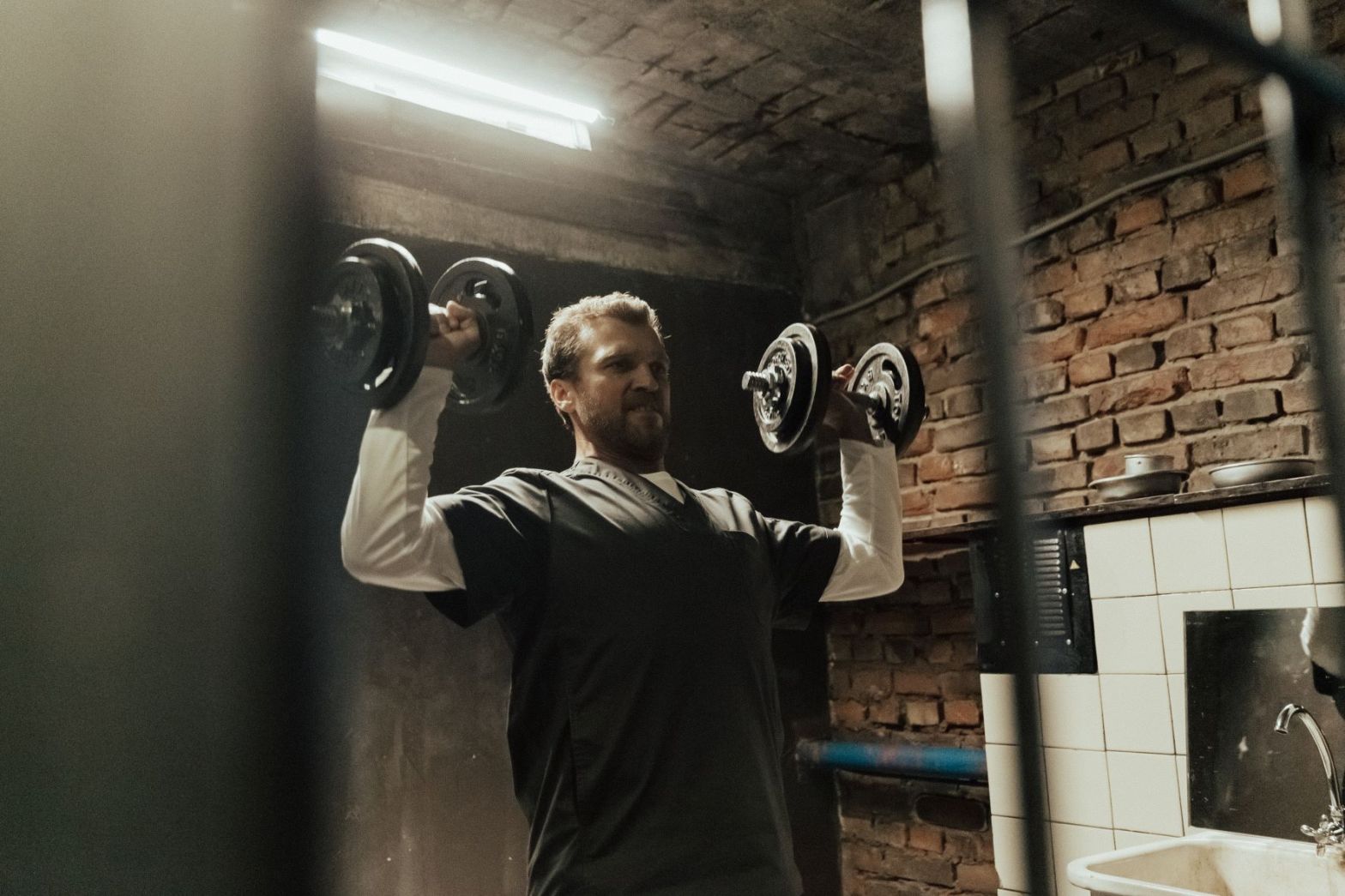
Six Prison Tips To Increase Your Mental Toughness

Photo by Ron Lach

There is a good reason you need to sharpen that No. 2 pencil (and it is probably not what you think).

Put yourself in a 10′ x 8′ cement room (about the size of a gas station bathroom). No phones. No internet. No clocks. Just a No. 2 golf pencil and your mind. You do not leave that cell. You stay there all day and all night. Your mind is all you have. Tick. Tock. Tick. Tock. Minutes stand still. Is prison beneficial? Can it change a person’s mentality?

So, what is your move, MacGyver? How long would you last? One day, two days, two weeks, two months? How about two years?

Prison can make a person mentally tough as nails, and there are plenty of benefits to mental strength. The experience might teach you how to adapt and embrace uncertainty, which translates to your daily professional life.

Here are some tips you can take along the way.

1. Take Zuck’s advice and become a minimalist. Besides the typewriter in the law library, your No. 2 pencil might be the most advanced technological piece of equipment you will own. This will help keep your mind proficient. You wear the same clothes daily, you eat what they feed you, and you do not have to deal with the same decision fatigue people experience daily in the outside world. Your mind is sharp, clear, and focused. Steve Jobs, Mark Zuckerberg, Johnny Cash, and Barack Obama all wear (or wear) the same style of clothing daily. It reduces the mental drain on mundane decisions and allows them to focus on more important ones. This is one of the prison’s less-known hacks. Try it.

2. Enjoy solitary confinement. Every prison is different. You have two options:

  • Break.
  • Get stronger.

Your mind will be strengthened if you can find mental peace from being with yourself for so long in such small quarters. You can replicate this hack in the outside world and now prefer small working spaces and isolation to get things done.

3. To pinochle or not to pinochle. This is about daily habits. While inmate peers played pinochle, spades, and every other prison card game invented, you can write and read. You can create a healthy pattern that you will write and read daily for 730 days straight. You can even write your first book with that No. 2 pencil. Further, try creating a competition with yourself. For example, you will start a 30-day reading game and reward yourself at the end. Try reading one of the most violent men in Real Prison Real Freedom book by Rosser MacDonald. This book tells the heartbreaking life story and inspiring change of the notorious Texas inmate Rickie Smith during a time of significant upheaval within the Department of Corrections. Thus, figure out some habits you would like to create, and put yourself to the test.

4. Flex on them. Body language is everything, whether walking the yard on a scorching-hot summer day or sitting at a table negotiating the terms of an investment. Generally, one can learn that your physical state is just as important as your mental state. There are physical body movements you can do that can help trick your mind into being more positive. For instance, if you are having a bad day, and your mind is getting the best of you, you can force yourself to smile and laugh. This creates a dopamine effect in your brain, leading to a happier state. If you are having a bad day, check yourself. Push your shoulders back, raise your chin, and walk with your chest out. Not only will you exude confidence while cruising the street, but you will also feel better mentally.

5. Find your inner MacGyver. Science shows that solving problems and pushing your mental boundaries creates new synapses in your brain. New synapses lead to increased intelligence. And prison has no shortage of challenges to solve, as every waking moment is a test of resilience and grit. Practice solving more problems on your own rather than going straight for help. It will improve your daily resiliency and problem-solving skills, making you much stronger mentally than your weakened and constantly “Googling” foes.

6. Make your bed. Beloved stoner and Up In Smoke star Tommy Chong spent nine months in federal prison between 2003 and 2004 for selling marijuana paraphernalia. He claimed, “The only two things I learned while locked up were picking up trash and making a bed.” Little did Chong realize that making a bed was improving his mental health. Research shows that simple, consistent daily habits and routines–like making your bed–significantly impact mental health and combat depressive symptoms.

Concluding Remarks

Yes, prison provides ample time, problems, and experiences to get mentally more challenging. With the right mindset, upon release, anyone can feel invincible. Instead of going upstate and working on your list, though, how about you follow these tips and sharpen that No. 2 pencil?

Why Write Short Stories: 5 Reasons To Continue Creating Stories

Photo by furkanfdemir

Why write short stories? Discover the magic of short story writing and learn to make your own.

The short story form is one of the most accessible formats of written media to digest. Individuals of all ages relish short stories and learn life lessons from the narrative within them. Given the literature’s popularity, it is no wonder over four in ten U.S. adults read short stories and novels.

Five Reasons To Keep Making Stories

Every writer should indeed experience writing short stories to refine their skills. Short stories can mature into fully formed novels and ideas once you have explored them further, sparking creative thoughts and empowering you to write more often.

Reason #1. You are free to Take More Risks With a Short Story. The risks in short stories are much lower, unlike in novels. As a writer, you can put less time, effort, or research into a brief account than you will in a book. In a short story, you only have to show some facets of a character’s life or personality. You also do not need to dive into the specifics of the universe or world you used as the story’s environment. These low stakes mean you try new things, have more freedom to experiment, and not be questioned by critics. The book genre rules guide authors on what works with most readers; although these rules make for a “popular, best-selling” book, it also removes distinction. 

Reason #2. You Can Market Yourself To Readers. In marketing, brands provide free trials or samples to attract clients and gain more sales later. Here, you can also treat your short stories as a writer like free samples. Readers who enjoy your writing style will eventually find you through these stories. Over time, they will yearn for more, leading them to buy your book series, novels, and more. Fans can even reach out to you for personalized commissions. You can set higher prices for your work when you get a reputation.

Reason #3. You Can Build Your Author Profile. If you begin writing short stories, you can build your author profile and become known in the writing world. Once published, short stories can expand your visibility and grow your online portfolio. If your readers love your stories, they can nominate them for a prize. Your published short stories will be eligible for yearly honors like the Mystery and Thriller Awards, and other readers can vote for your accounts. A nomination is a huge success when building your writer’s reputation.  

Reason #4. It Allows You To Rekindle Your Writing Motivation. Every writer will have to deal with lost motivation or writer’s block from time to time. Worse, some go through writer’s burnout. Writers may feel directionless and exhausted when they put all of their attention on their more prominent and extended writing projects. Everyone needs a proper break. As a result, some people will take time off from writing or work. One approach to revitalizing your passion for writing is to distract yourself with more paper. Move away from your writing work, whether content for your blog or study and start creating a short story with endless possibilities and fresh ideas.

Reason #5. It is Faster, Easier, and Less Stressful To Write Short Stories. Here is a simple reason to write short stories: they are easier to create. A short story only needs a few plot twists, characters, settings, or conversations. Sometimes, it is enough to have a protagonist who receives a mysterious object. With short stories, the work becomes faster and easier. You also have more freedom to concentrate on what you want to show. After all, you would only have to write down more backstories if they connect to the short story’s plot. You would only need to place a few other characters that can confuse the reader, just like the literary pieces of poetry and love stories in Brian’s book. Brian Clements has been writing most of his life but finally dared to publish his very first book, Anthology of Short Stories and Poems, which came out in November 2019 and is available on Amazon.com and Barnes and Noble. Brian continues to write more short stories and poetry that he hopes will inspire you and help his readers explore their imagination that will take them on the adventures of a lifetime.

In Conclusion

Short stories are the best choices for newcomers to the writing world. Novices would not feel the time pressure and would not have to push themselves to churn out 80 extra pages of fluff to finish a project. Instead, they can focus on writing short stories to practice.

The Role Of Poetry In Our Lives

Photo by Suzy Hazelwood

Poetry is a profound insight that enables a poet to idealize reality and to see things or situations in a particular way, to express feelings of his own accord, and to represent them in such a way as to delight the readers.

How do you experience poems? Do you turn to them for inspiration or joy? For solidarity in moments of sadness? If we let it and embrace it, poetry can give us a way to empathize with one another. In its immediacy, poetry is a counselor aiding us to understand one another and leading us away from violence to pity and mercy, from hate to love.

Role of Poetry In One’s Life

Many famous poets and authors have said that poetry is one of the most basic forms of expression. So why is poetry so important that it plays a role in our lives? There are various reasons, and below are just a few.

Poetry Can Help You Communicate Your Thoughts and Feelings. Poetry has the power to touch our minds and hearts. It can help us express ourselves in a cathartic and healthy way. Poetry can be an excellent outlet for our emotions and help us communicate our feelings in a non-judgemental and safe manner. Writing poetry can also be a perfect way to process our feelings and thoughts about difficult life experiences. Poetry is also an excellent way to link with people who may be going through the same experiences. When we hear or read another individual’s poem, we can empathize with their experiences and deeply connect with them. This can be a healing and compelling encounter.

Poetry Can Be a Form of Therapy. Poetry can be a remedy that aids you in processing your emotions and dealing with difficult life experiences. Writing poetry can be therapeutic because it allows you to express your feelings and make sense of your experiences. Reading poetry can also be therapeutic, providing understanding and comfort. Also, it can be a helpful way to deal with an extensive range of emotions, including anger, sadness, and fear. Poetry can help you understand your feelings and achieve clarity about your situation.

Poetry Can Help to Expand Your Understanding of Yourself and the World Around You. Poetry can let us see the world in unexpected and new ways. It can help us express what we may not be able to put into words and give us a unique perception of the world around us. In addition, by exploring the emotions and experiences of others, poetry can help us better understand our motivations and feelings. The poem’s metaphors and images give us a deeper understanding of the author’s perspective. Therefore, poetry can be an invaluable tool for global and personal experience.

Poetry Can Help You Explore Your Creativity and Imagination. Many people think of poetry as a stuffy, old-fashioned art form. However, poetry can be a great way to channel your creativity and explore your imagination. The best thing about poetry is that there are no rules. Whether you are writing about your deepest feelings or just describing the world around you, poetry can be an excellent outlet for self-expression. There are unlimited ways to write about. You can play with phrases and words, experiment with different meters and rhyme schemes, and let your imagination run wild. Poetry can be a great way to exercise our creative muscles and explore concepts and new ideas, just like Poetry In Motion, a Quattlebaum book. Here, the author conveys that poetry is life in motion, and motion is the poetry of life. This book is designed to bring its readers to life in the motion as we know it, the miracle of who we are. That is, Life in the Presence of God!

Poetry Can Improve Your Communication Skills. Poetry can improve your communication skills by teaching you how to express yourself more effectively and clearly. One of the advantages of poetry is that it teaches you how to use words sparingly. To create a wonderful poem, you need to be able to express what you want to say in as few words as possible. This forces you to choose your words carefully and think about what you want to convey. This will help you learn how to express yourself more concisely and clearly. 

Final Thoughts

Poetry is a bridge—a quick path to becoming better humans and being the change in the world. Creating a world is less about putting each other down and apart and more about coming together and helping us to realize that we are not as different as we think. And despite our differences, we are not alone in our pain, grief, joy, or happiness.

Increasing Your Personal Empowerment

Photo by Bekka Mongeau

Personal empowerment is integral to taking control of your own life. Learn about what self-empowerment looks like and how to develop steps toward building your power and sense of self-efficacy.

If you are considering applying for work or promotion, going back to school, or making a life change, the first step is to embrace and nurture the confidence you will need to put yourself forward. Faith not only helps us understand where our starting line is; it helps us lay out the path we will need to reach the end. This is where self-empowerment comes in.

Self-empowered individuals take control of their lives by taking actionable steps and setting goals to achieve them. They understand how to fix things and are focused, confident, and comfortable making decisions that lead them toward their future. If you are insecure or your self-confidence is shaky about your ability to fulfill your ambitions, you can take the steps below to live a more empowered life.

Tips to Achieve Self-Empowerment

If you strive to attain personal empowerment, identify what you can manage, focus on your drive, and keep a goal-oriented, objective mindset. The following seven (7) tips can help you achieve self-empowerment.

1. Develop a Positive Attitude. People who believe they control their destiny, rather than allowing external concepts such as luck, fate, or circumstance, are more likely to take control of their future. Cultivate an outlook and positive attitude by evaluating your strengths and weaknesses, trusting your ability, and pursuing your passions.

2. Set Reasonable Goals. Measurable, achievable goals are essential to self-empowerment, and understanding how to fix them can aid you in feeling good about your victories. If you want to join a marathon, start with more minor, increasing distances rather than trying to run 26 miles on day one. Or, if the shoe fits, do some style empowerment by wearing a Touching Lives Urban Apparel by Jarrod D. Dixon. Jarrod is exceptionally blessed with the artistic God-given talents of drawing and Creative Writing. Check out his books and apparel on his website now. Remember to purchase one as well!

3. Surround Yourself with Positive People. Laughter is contagious — and so are negativity and pessimism. Surrounding yourself with motivated, like-minded individuals can help you feel empowered to reach your goals. If your self-esteem diminishes, set a time with positive family members, peers, and friends. Experiencing their positivity can enhance your mental well-being, minimize negativity, and empower you to follow your dreams.

4. Practice Self-Care. Self-care includes any activity you do to feel happy and healthy. It can have everything from exercising and eating right to treating yourself to a spa treatment. Scheduling time to rejuvenate and relax will make you more productive. Further, being kind to yourself can aid you in being confident in your ability to overcome and address the hardship.

5. Use Positive Self-Talk. Focus on what you can do to live a self-empowered life instead of what you cannot. If you want to apply for a job requiring fluency in French, instead of saying, “I don’t speak French,” try, “I don’t speak French yet. I can learn.” Displaying confidence and practicing self-affirmations in reaching your goals can aid you in taking steps to achieve them.

6. Be Assertive. Individuals who strive toward personal empowerment must be comfortable expressing their ideas, thoughts, and needs. If you are invited to a particular activity but have a presentation the following day, let the host know you will leave early to prepare. Or, if you and a co-worker are working on a project but are doing most of the work, feel free to address the situation head-on and ask them to do their share.

7. Create an Action List. Empowered individuals take action, exhibit a growth mindset, and are comfortable developing and learning their potential. These people also know that success does not happen overnight but is a mix of actions and decisions. If you aim to finish a degree within four years, list the steps you will need to achieve that goal, such as knowing financial aid options, establishing a study schedule, and enrolling in an online program. 

Live a Self-Empowered Life

Individuals who consciously determine to round up their lives are often more fulfilled, happier, and more career satisfied. Taking steps to gain a life that you plan offers many benefits.

Would You Dare To Drink More?

Photo by Pavel Danilyuk

While raising a glass now and then may be okay; however, excessive alcohol consumption can lead to extreme alcoholism and alcohol abuse.

The society we live in is solidly prejudiced by alcohol. It affects people of all gender, ages, and backgrounds. Alcohol abuse has long been a problem throughout humanity’s history. It is a disease that has caused many people to be overcome with trouble, issues, and debts, and also a pattern of drinking that interferes with daily activities. Alcoholism is a chronic, progressive disease and often fatal. Some people would debate that alcoholism is only the over-consumption of alcohol; this statement is only somewhat true. An alcoholic is a person who relies on alcohol as a medium to help them deal with physical, emotional, or spiritual needs. 

Causes of Alcoholism

The leading causes of this disorder may be categorized into two. These include genetic and environmental factors. The genetic material that determines the drink’s metabolism also influences the disorder’s risk. People with the disease’s family history may also develop it.

Particular research argued that the expression of genes is influenced if an individual starts using alcoholic beverages at an early stage in life—his increased risk of alcohol dependence among such individuals.

People who do not receive support from friends and family are highly likely to develop alcoholism as well. 

Effects

  • The effects of alcohol abuse vary. Consumption of excess alcohol may lead to various illnesses and complications. Consequently, it may lead to pancreas inflammation, cancers, and liver disease. Alcohol-related cancers are suspected to form as the components in the alcoholic beverage are turned into acetaldehyde. This is a potent carcinogen.
  • Alcoholism also increases the risk of neuropsychiatric and cognitive disorders. Excessive use of the drink may cause an increase in the level of toxic amino acids in the plasma. This may be the reason why some individuals suffer from withdrawal seizures.
  • Alcohol abuse may also cause memory issues and may impair learning. Alcoholism also significantly affects the brain. 
  • Alcoholism may also cause heart attacks and strokes. Abuse of alcohol increases the risks of a heart attack. Some studies have shown that drinking alcohol in moderation may offer some level of protection to individuals against heart attack (Mukamal et al. 1965).

Alcohol causes more than just an issue for the individual drinking, especially with prolonged alcohol misuse. Because addiction can negatively affect many areas of a person’s life, alcoholism often has profound effects on family and friends. 

It Damaged Family Relationships. One means in which alcoholism affects families is in broken relationships. Families of individuals affected by alcohol misuse often struggle to build strong emotional bonds, even within their family unit—this starts with the parents. Heavy drinking is connected to lower marital satisfaction. Also, alcoholism increases the risk of negative interactions, especially among couples. 

Developmental Issues in Neglected Children. Children of parents who wrestle with alcoholism are at higher risk for behavioral, cognitive, and emotional problems. Sadly, parents who are grappling with alcohol addiction are often neglectful of their children’s emotional and physical needs. This leads to severe developmental issues for the kids. 

Domestic Abuse. None of the most sobering consequences of alcoholism is an increased risk for domestic abuse in the family. Abuse strapped to alcoholism can be either physical or emotional. People battling alcoholism may manipulate their family members, insult them, or humiliate them. Since alcohol use lowers their self-control levels by affecting physical and cognitive functioning, people who drink are more inclined to act violently when frustrated.

It drained Family Finances. The habit of consuming alcohol regularly is expensive. While the amount spent on alcohol will vary depending on the type and frequency chosen, the expenses add up. It is not uncommon for someone battling this addiction to pay over a thousand dollars a month for alcohol. That is money that the family could use in some other ways, and this financial expense takes a toll on the overall well-being of the family. 

These effects of alcoholism have a detrimental impact on the family. Margaret Moschak, the author of My Alcoholic, My Love, is a touching tale about family, marriage, addiction, and faith in oneself and God. The book details leaving an alcoholic you love and one’s a compelling journey of escaping the destruction of alcohol in their home and transforming her family’s life. 

5 Ways To Teach Your Kids How To Be Brave

Photo by Alexander Dummer

When you look at every hero and heroine, whether real or fictional, you will find a few common denominators among them. Virtue, skill, and, most importantly, courage.

Courage drives people to challenge limitations, falsehoods, and wrongs, so they can become more than what they were. Even when you are not planning on raising a hero, courage is still an essential trait for a child to develop, not necessarily to combat the injustices that plague modern society, but to at least be willing to forgo comforts to achieve specific goals.

Five Ways To Teach Your Kids To Be Brave

A warrior on the battlefield who faces death and still marches onward, a musician or an athlete who can perform in front of thousands of people, a single boy who was able to cross a room to begin a conversation with a girl he finds pretty—where do they find the bravery to do these things? What exceptional quality do we want to instill in our kids that will make them brave when others cower? We will break that down into these five ways to help your kids be brave.

1. Show them what bravery looks like. If you want your kids to be brave, you must be brave. Let them witness you stepping out of your comfort zones. It is also vital for grown-ups to model how to be courageous and face challenges themselves. If we are brave and face uncomfortable situations, our children can learn to do the same. When your character is tested in front of your kids, show them the strength you possess to do the right thing. We are tested in many ways daily. Be your kids’ hero.

2. Challenge and praise them. Courage cannot be taught the same way we teach arithmetic or good manners. There must be a challenge to learn courage, and your child needs to overcome that challenge. We naturally want to protect our kids at all times. However, we also must challenge them regularly to do something and try new things they might fear. Some examples are trying fresh food, playing a sport, or speaking in front of the class. They give much love and praise when they step up and do these things. Build on their courageous attempts.

3. Implore culture and heritage. It is almost impossible to complete a brave act without reason for doing so. Our rich heritage and various cultures provide the foundation for what we believe. When we implore family pride in that manner, we invoke the origin of our people and nation. Teaching kids where they come from and their history gives them the platform they require to display courage.

4. Encourage them to reach out. Young kids are very accepting of almost anyone. Later, however, cliques will form, and social groups will stick to the same patterns. People who are “different” often wind up left out. Brave kids, who become the types of adults we desperately need, will rise above peer pressure. They will reach out to that child sitting alone in the lunchroom. Please encourage them to befriend the child on the outside looking in.

5. Build confidence and conviction. Build and nourish faith in your children. Help them know their core identity is not in their performance, what others say about them, or the sum of their possessions. Their identity should be found in the fact that they were crafted with love by the hands of the Creator. When they know that, they can walk in confidence. That confidence will feed their courage to be themselves and take relational risks. Grab a copy of the book entitled “nobody” IS “SOMEBODY” by Dr. Sandra C. Birchfield, an informative and exciting book recommended for primary and middle school children. The book tells the reader how an introverted child gains respect for his smartness and shows the courage to participate in the Spelling Bee.

Final Words

Courage demands security and pride. Knowing that “no matter how bad things can get, there will always be a support system” will help your child get back up. Be that support system.

Allow your child to venture out, try new things, and make mistakes without making them feel like you love them any less.

Design a site like this with WordPress.com
Get started