
Poetry as Catharsis: How Poetry Helps Us Emotionally Heal

Photo by drobotdean

Humans are unique thanks to our ability to use a concrete form of language. Although it has been scientifically observed that animals have shown fear, grief, and other intricate emotions, they cannot articulate them. We are the only known species to use language (in many forms) to communicate with others and express ourselves.

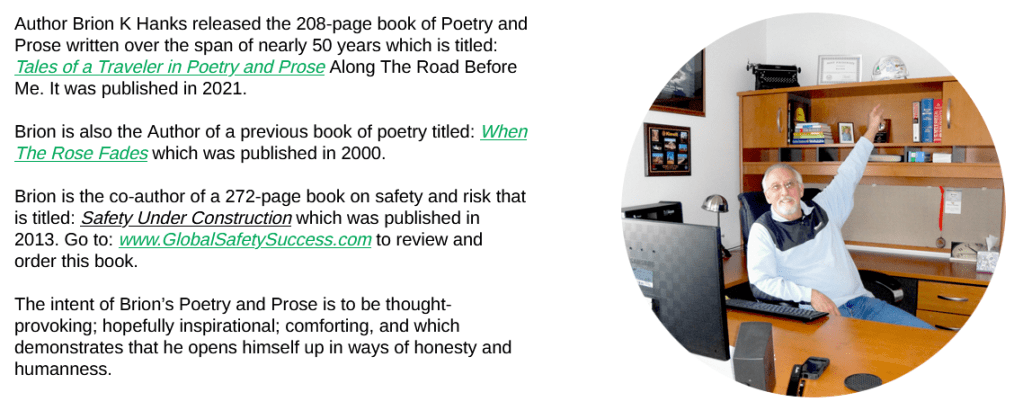
Poetry is among the unique forms in written and oral languages. Many individuals use poetry daily, with Brion K. Hanks, author of “Tales of a Traveler in Poetry and Prose Along The Road Before Me,” who writes heartfelt poetry for family and friends. Poetry as catharsis is vital to our lives.

But what exactly is catharsis, and how does poetry help us heal emotionally?

Defining Catharsis and its Nuances

While it’s true that our emotions can often be a great source of inspiration, drive, and joy, they can also cause us great pain, disappointment, and sadness. Emotions can be a double-edged sword that can hurt others and the wielder. Take anger, for example.

Anger is a powerful emotion characterized by antagonism aimed toward something, or someone we feel has intentionally done us wrong. If left unchecked, anger can resemble boiling water climbing over the pot, scalding anyone nearby. This is where catharsis comes in.

Catharsis is a process of releasing repressed or strong emotions, giving relief. This emotional release method is associated with the need to alleviate unconscious conflicts. Anger, fear, anxiety, trauma, and stress can lead to complex and intense feelings to stack up over time.

Eventually, a person will reach an “emotional tipping point,” and that’s the time when they start to feel as though they’re about to “explode.” The best solution is to vent such feelings healthily. Poetry can provide a safe and healthy way to release these intense emotions, like reading poetry for family and friends.

An example of what catharsis is is in William Shakespeare’s Othello, specifically in Act 5 Scene 2, where Othello discovers the truth and realizes the horror of his deed, prompting him to commit suicide. Before passing away, he uttered the words:

“I pray you, in your letters,
When you shall these unlucky deeds relate,
Speak of me as I am. Nothing extenuate,
Nor set down aught in malice. Then must you speak
Of one that loved not wisely, but too well.
Of one not easily jealous, but being wrought,
Perplexed in the extreme. Of one whose hand,
Like the base Indian, threw a pearl away Richer than all his tribe.”

Catharsis is necessary for healing, especially when you’re healing emotionally. With that said, let’s look at how poetry as catharsis can help us heal.
How Poetry as Catharsis Aids People

Poetry can give comfort and improve mood in times of grief, stress, and trauma. By using titillating imagery and powerful word mixes, accompanied by meter, rhyme, and metaphors, we are free to express ourselves better.

Making the intangible into something tangible is also one of poetry’s benefits. Feelings and emotions are intangible things. We can neither hold nor see them (unless a person acts them out), but we can perceive them.

We hear them whisper in my ears. We feel them crawling on our skin or clawing their way up from our stomachs to our chests. They are real, but since they’re not tangible, we have no natural way of dealing with them.

We give them form by using words and putting them on paper or reading them aloud in front of an audience or in the mirror. Once we have their tangible form in our hands, or once people have heard us talk about them, we can then start the journey. We can choose to burn the paper or never perform that poem again as a way for us to move on physically.

Consider Brion K. Hank’s poem “This Is My Life” as he makes his past self and experiences tangible through words:
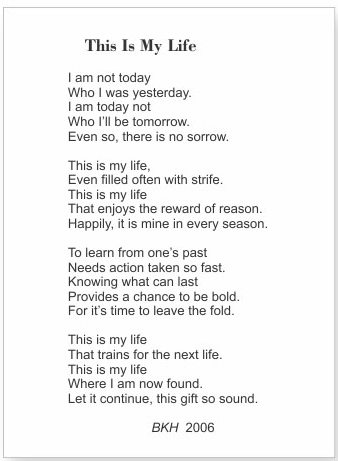
Here, he claims his life to be his own and serenely moves past his nostalgia, looking forward to what tomorrow offers. Thanks to poetry, Brion can cathartically talk about his past and how he is actively living in the present.

Humans are unique thanks to our ability to use a concrete form of language. And that same language allows us to experience catharsis on an entirely new level. A level of catharsis that only we humans can go through.

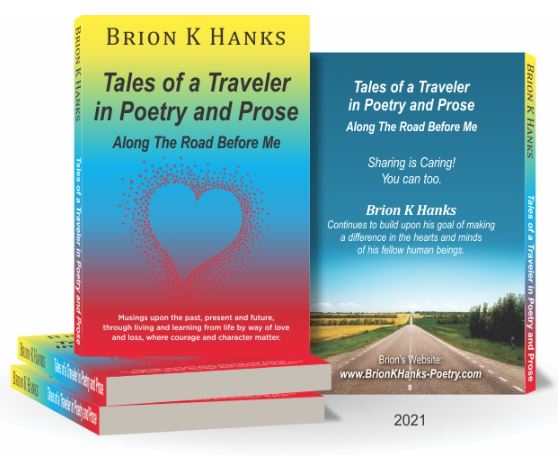
If you wish to read more poetry for family and friends with catharsis sprinkled, check out Brion K. Hank’s “Tales of a Traveler in Poetry and Prose Along The Road Before Me” here and add it to the five best poetry books that you should be reading right now!
One Caregiver’s Journey | Thoughts and Some Ideas

Yaroslav Shuraev

After reading One Caregiver’s Journey, I was struck by the realization that one day I would have to provide care for my parents as well. These are my thoughts.

Taking care of people is extremely hard, but important. It is important that people do it. I sincerely believe that caregiving is one of the oldest professions in the world. 

When you think about it, care is a fundamental cornerstone of society and human existence. Without care, there would be no cooperation, and without cooperation, there would be no sense of community. It is from the community that a broader society arises. So, it is no exaggeration to say that without care, there would be no civilization. At least no civilization as we know it or would want to be a part of. But, between you and me, dear reader, I would not want to live in a civilization that does not care for its people.

Now, where does this talk and thinking of care come from? Over the recent months, I have been visiting some relatives in the Florida countryside. They were an aunt and an uncle, a few cousins, and their families. My aunt and uncle were old–older than either of my parents, in fact. At that age, some families would have already considered or had already persuaded their parents to live in nursing homes or in assisted living communities. But my cousins didn’t. 

In private, I asked them why that was. It was easy enough to find quality in-home senior care. They concede that it was. There were a lot of caregiver agencies nearby, and there were even a bunch of senior homes they could take their parents to, but they didn’t want to. “They cared for us when we were children,” they said. “And we want to take care of them when they are old.” I could only nod, perplexed at the thoughts churning in my mind. 

I enjoyed my time with them and went back home. Throughout the journey, I was thinking, and while passing the time on my tablet, I came upon the book One Caregiver’s Journey by Eleanor Gaccetta (It helps that I was already googling about caretakers).

The book was all about the author having to rearrange her life as she takes care of her ailing mother 24/7. She does this until her mother dies at the old age of 102. I won’t talk too much about the book, you have to grab a copy of yourself to know what happens, but I do want to talk about what I felt. 

Before reading the book, I hadn’t really thought of caregiving in any capacity. Before that visit to my relatives, I hadn’t really thought of caregiving at all.

My parents are persistent and tenacious. They’re hardy people. So, I never imagined them becoming bedridden or in need of constant care. But seeing my aunt and uncle, I began to think about what if. And after reading Gaccetta’s book, I began to believe it was going to be an inevitability.

Now, this is not to say that I dreaded the idea (although I must be honest and say there were some apprehensions about the fact), but what filled my mind most was the idea of care. If and when it happens that my parents were going to need immediate 24/7 care, I would be doing it, but the fact that we take for granted the act of caretaking is somewhat odd to me.

As I’ve mentioned before in this article, I believe—I know that care is foundational to present civilization, but the fact that such an important institution lumbers on in the background, largely unnoticed by the world, was an eye-opener.

Not everyone has what it takes to be a caregiver, and a lot are forced to become caregivers. To those people and to those who willingly commit to the act of caregiving, I cannot help but applaud and revere them in my heart.

Caregiving is akin to sharing your life with another–not anything like marriage or something like that–but something more altruistic, more spiritual (if I had to peg a word to it). There is something powerful about it that I still can’t place.

With the recent events all over the globe happening, I do hope that everyone wakes up to caring and that we all engrave it on our hearts how important it is that we continue to care.

Perhaps, I’ve rambled enough. More likely, my thoughts are still stewing. When they’re ready, I’d like to revisit this topic once more.

For now, I encourage you to call up your parents or any old relatives or friends and grab a copy of One Caregiver’s Journey. It’s well worth the time to read.

Why is Physical Activity Extremely Valuable for Child Development?

Photo by Kampus Production

In our modern times, physical activity for kids has dove down significantly. According to Forbes, many children nowadays do 20% less physical activity during the pandemic. The numbers can be alarming, with exercise and physically demanding movements crucial during a child’s growth. With this in mind, the author Kristina Orliczky wrote a physical activities storybook on Mona’s Mitten, her children’s book designed to encourage kids to “move.”

There is a reason why P.E. (Physical Education) classes are mandatory in most schools. With physical activity affecting a kid’s emotional, physical, and mental growth, there’s no contest on how valuable physical activity is for youngsters. But how exactly does playing tag, hanging on the monkey bar, and doing sports benefit a young girl or boy?

Good question. Just sit back and read because we’ll look at those factors today.

Physical Development

Running around and having fun is a child’s version of getting exercise. By generating stress on the muscles and bones while chasing down a playmate to catch them during a game of tag, these organs become more robust and durable in response to the stimulus. Having well-developed bones and muscles will reduce the chances of getting bone-related and muscle-related diseases.

Being Fit and Healthy

One of the main methods to increase or develop physical strength is engaging in physically demanding activities. To a growing child, being physically strong carries numerous advantages, like lifting heavy objects for daily tasks or simply walking longer distances and not getting tired quickly. Physical activity also helps promote stability and flexibility.

The Cultivation of Motor Skills

Motor skills are essential because they help us properly move our bodies. Giving a child the opportunity to cultivate helps them become skilled at mastering the basic motions they need for their daily life. Things like tying a shoelace, feeding oneself, writing, bathing, and more can only be trained via physical movements. Building a snowman, for example, can be an exciting and significant physical activity to do with your kids during winter.

It Provides Children with Better Posture

Although slouching isn’t a big deal, if you want your kids to have better posture, then understanding some exercises can help. You can teach your children some light exercises that focus heavily on proper postures, such as push-ups and add a fun element. Better posture can also help stave off Kyphosis, the excessive, forward-rounding shape of a person’s upper back.

Helps Manage a Child’s Weight

Burning calories is always done best with excellent physical activity, which is vital for a child not to become overweight. Should a youngster become obese in their childhood, the risk of staying obese to their adulthood is very high. Parents can help avoid this from happening by encouraging their kids to partake in some form of exercise. The physical activities storybook on Mona’s Mitten can serve as a fun starting activity the family could add to their bonding time.

Keeping the Heart Healthy and Functional

While chubby kids can indeed look adorable, those extra fats in their bodies come with a high price to pay. Children who develop obesity at a young age are at risk of developing heart disease and complications caused by high cholesterol levels, as well as metabolic conditions such as Type 2 Diabetes as they grow up. The worst-case scenario would be that they develop such alarming ailments at a younger age and might hugely hamper their life into adulthood.

Developing Brain Power

If you think that exercise is just about the brawns, you must think again. Scientific studies show that activities such as playing games like tag help boost a kid’s cognitive functions. What happens is that during such activities, nerve cells located in the prefrontal cortex and hippocampus fire off, causing them to multiply and form brand-new networks and connections. The repetition of physical activities also helps improve memory and concentration.

The importance of exercise and moving around for a child can’t be underestimated. With the many reasons why it benefits children we’ve listed here, any parent will see why they should go out there and motivate their kids to do some bodily activities. The physical activities storybook on Mona’s Mitten, written by Kristina Orliczky, offers many fun options for parents and their young ones.

3 Uncomfortable Truths Black Workmates Need You To Know

Photo by Pavel Danilyuk

Together, let us transform organizational cultures in a way that invites everyone to show up at work as their authentic selves.

While no one has a specific prescription for eradicating racial injustice in the workplace, I believe that a vital first step is embracing the difficult conversations and uncomfortable truths we’ve become too accustomed to avoiding. The awkward baseline fact is that blacks and whites in corporate America often maintain their subcultures, including very various informal conversations in the workplace, with a surprisingly little overlap at times.

In this historical moment, though, this natural doubt and pull through political correctness (on both sides) may cost us desperately needed collective progress. Hence, it’s worth the risk to stop whispering and start sharing.

Below are the three vital “truths” that I feel many black people in corporate environments would boldly discuss in “private” but not necessarily assert in “public.”

Truth #1. Racism does not just show up in its most extreme form. There is a continuum (of racist behaviors and thoughts), and you may be on it. This truth is one reason white people are so quick to insist that they are not racists. It is because the word “racism” has been so corrupted in our culture that we only recognize it in its most extreme form. To be able to see racism only in its most egregious and blatant form renders one unable to detect it in their everyday actions or broader belief system.

Truth #2. Even if you haven’t offended anyone (that you know of), you may be part of the problem. Arguably, the more significant threat to racial justice in the workplace is not the rampant, overt racist who is more likely to be the obvious, easily detected “enemy.” Still, instead of the more likable workplace “friend” who chooses to look the other way, not get rationalized or involved inappropriate behavior or unjust processes or systems (“Well, we’ve always done it that way.”) We are either being antiracist or racist.” In business jargon, I want to say that you are one of the two, part of the problem or part of the solution.

Truth #3. Every black individual on your team is not your friend. While true friendships that cross racial lines develop in the workplace (thank God), there seems to be a tendency for white individuals, in particular, to misinterpret work or project-specific affiliation with broader friendships with black co-employees. The truth is that many workplaces are “socially segregated,” meaning work teams and projects may look diverse. Still, an interesting thing often happens once the focus changes from work to social time (e.g., lunch rooms, break room discussions, drinks after work, conference socializing). People will tend to self-select into groups where they feel most at ease and comfortable, and for black employees, this often means chatting or huddling with other black employees. This in and of itself is an excellent standard process and not at all problematic. Still, it’s a very tangible demonstration that participating on a team or working on a task with someone doesn’t necessarily make you “friends.” 

Having these three truths, the book American’t by King Bell can relate to these. Here, Bell conveyed that being black in America has obstacles that we have to overcome and, unfortunately, accept. He chose to write in his effort to maneuver since he can’t change the color of his skin or the minds of so many in his country who cannot possess compassion for anyone who isn’t white.

American’t is the superlative highlights the author’s vexation when America disappoints him, and he knows that so many other non-white people share the many annoyances through conversations, music, art, and, yes, his contribution to the plethora of other agitated Black authors.

The American’t community is composed of those who understand not only the exasperations that come with waking up black but the need to release the frustrations onto paper instead of using a gun, a bomb, or storming the Capitol.

Final Words

It’s natural for people to seek out others with similar backgrounds and experiences (which is the premise behind many corporate Employee Resource Groups). Still, we often need to make more effort than we might think to genuinely develop friendships in the workplace with those who do not look like us.

5 Reasons As To Why Education Is Extremely Important To Youth

Photo by August de Richelieu

Education is the most crucial thing in the world; youth must have it.

To say education is necessary is an understatement. Education is a weapon to improve one’s life. It is probably an essential tool to change one’s life. Education for a child begins at home. It is a lifelong process that ends with death. Education indeed determines the quality of an individual’s life. Education improves one’s knowledge and skills and develops personality and attitude. Most noteworthy, education affects the chances of employment for people. A highly educated individual is probably very likely to get a good job. Knowing the importance of education, as a result, affects life and society.

Importance of Education in Society

Education helps in spreading knowledge in society. This is the most noteworthy aspect of education. There is a quick propagation of knowledge in an academic community. Furthermore, there is a transfer of knowledge from one generation to another through education. It helps in the development and innovation of technology. Most noteworthy, the more education, the more technology will spread. Important developments in war equipment, medicine, and computers, take place due to education.

How can education entrust youth to become tomorrow’s leaders?

While young, they are at the center of absolute strength. They think big, hope for the best, and envision a better tomorrow, making unceasing efforts to turn their lifelong dreams into concrete actions. Youthfulness is a phase of complete and whole change—a perfect shift in terms of mentality and physique, society and environment, regionality and universality. 

Education has also given people critical skills and tools to help them provide for themselves and their children. Education encourages good governance stability and helps fight against corruption.

Here are some of the fundamental reasons why education is vital to the youth:

Reason #1. For a happy and stable life. One must be educated to enjoy the good things the world offers and lead a happy life. A great job and an excellent social reputation are a few advantages of being educated. Education is necessary for a promising and secure future and a stable life.

Reason #2. Economically Stable. An educated person has more odds of landing an excellent, high-paying job. Everybody wants a good life but a good life. It may be called the “root of all evil,” but most individuals will agree that money is vital for survival in the present world. The better educated you are, the more career choices you have!

Reason #3. Active Participation in the Society. We all live in a society with its own set of spoken/unspoken rules, one of which is education. Society expects you to go to school, follow to college, get a job, settle down, etc. Education helps you become a valuable member of society. An educated member has a greater chance to contribute to his community. Education enables you to become an active member of society and participate in ongoing changes and developments.

Reason #4. For economic growth of the nation. First-world countries such as Australia, the U.S.A., and Japan are a few countries with very high literacy rates. These countries are highly robust, and their citizens have a high per capita income. On the other hand, in developing and underdeveloped nations, where the literacy rate is not as high, several individuals still live below the poverty line. Education is crucial for the economic prosperity of a country!

Reason #5. It saves you from being cheated. Education keeps you from being fooled and exploited. We live in a country where we relish the freedom and several rights. It is easier to take advantage of illiterate and innocent people. They may be shut into signing false documents or be deprived of some liberty because, unlike educated people, they need to be better aware of their rights and freedoms.

The book of Alfred H Kurland, “The Soul of Adolescence Aligns with the Heart of Democracy,” is a constructive critique of old paradigms about adolescence which dismiss, demean, and sabotage their contributions and understanding of their true nature. It is education, utilizing modern scientific research, the wisdom of traditional spiritual insights, and current youth development studies and community organizing. It uses an informal tone, embedding evidence within reflections of direct experience and experimentation. The style is critical but optimistic and hopeful. 

Similar to education, the book will enlighten the readers on how to deal with the young ones to understand and effectively work with teens. We need to treat them not as problems to be solved but rather as problem solvers for issues we share in common.

A Country’s Flag: 5 Ways To Show Your Patriotism 

Photo by Karan Dalal

We can all understand patriotism—even if we experience it differently.

The flag is the symbol of the community, which separates it from the rest of the world, but it is more than just the symbol. It is the identity of the people in front of the world they belong to, which country or nation. So the flag is the identity of a person or a particular region that we display in front of the people. The flag is not just a piece of cloth that flies in the air and has no meaning. In fact, with this flag, many patriotic emotions are also connected. People feel patriotic about this flag as it is their identity in front of everyone. Countries spend a lot of time and money designing flags because the flag’s pattern shows the communities living in the country and their religion as well. By seeing the flag of the country, we can understand many important things about the country. 

There are many different kinds of flags; some are national flags, some are battle flags, and some are sports, army, navy, air force, international and state flags. But besides all the other flags, the national flag has more importance, and we respect it a lot and take care of it more than our lives. 

Ways to Show Your Patriotism

Beyond the flag-waving, many of us want to show our patriotism in more heartfelt ways. Here are some suggestions:

1. Study history. You can only change the future with a solid understanding of the past. Thus, being a responsible citizen demands a solid grasp of history. And, in the Internet age, there is no excuse for disregarding so many adults. Watch a film. Read a book. Take a class. Learn about our culture in all its splendor and horror so you can engage in honest conversations and debates. Again, gain a deeper understanding of where we have been as a country so you can help inform us where we are going next.

2. Care for the weak and the poor. Nothing is more important in this life than standing for those who cannot stand for themselves. Make it a daily habit to learn from and give your time, talent, and treasure to those who need you most.

3. Think “we” vs. “me.” We can (literally) no longer afford a parochial consciousness that prizes one person or place, or race above another. The Great Recession has dramatically shown Americans – they are interconnected – economically, socially, and morally. Begin to develop a new consciousness that seeks to understand what is best for the whole community versus you and yours. And then begin to act on that consciousness.

4. Proper way of handling and displaying the flag. As part of a more significant patriotic celebration- flag week during which police stations, fire departments, and schools are urged to display the flag, and government buildings are required to. Join in by flying the flag. Just be aware that flag etiquette requires that no other flag be flown higher than the national flag and that the flag cannot touch the ground or any surfaces beneath it.

5. Pay respect to the fallen. Visit one of the nation’s heroes’ cemeteries — or maybe a veterans’ memorial or monument — to commemorate fallen soldiers. 

Moreover, every country has its flag. Monique Elias, the author of the book, “Faces And Places In The World,” is a book about country flags and places. It shows on each page of her book a picture of their dreams, including the image of the country flags and areas. The book educates toddlers about the world concerning country names, famous geographical sites, and landmarks. Face Place in the World is a book of short rhymes about boys and girls dreaming of traveling the world and what they do or see when they visit all of its famous cities and sites in various countries around the globe. Their dreams take them to 26 countries. The activities or sites they behold take place at famous landmarks and in prominent cities in the countries of the world. Each sentence is a cute rhyme of where they are and what they dream of doing or seeing.

Final Consideration

Patriotism comes in all forms. Embracing patriotism will show much-needed support for our country and help to create a stronger, more unified nation. Even something as simple as wearing our nation’s colors can have a compounding effect on the patriotic acts you deliver in your everyday life.

 5 Basic Safety Tips: It’s Everyone’s Priority

Not all of them apply to every situation or everyone, but in some cases, they could save your life or the life of the person you love.

Photo by Pixabay

The world isn’t all sunshine, rainbows, and cuddly pandas. Neither is it as scary, and on the verge of collapse as some news channels might tell you. Either way, most of you might agree that our safety and the safety of those we love should be our top priorities.

Here are some of the few safety tips that everyone should know to protect themselves and loved one’s from danger:

1. Don’t set your home address on any gadgets, instead to an address near your home but not your home address. If someone steals your phone or breaks into your car while you are away from home, you do not want the crook to attempt to rob your house or call friends in the area to do so. Theoretically, any paperwork in a car containing your home address should be locked up in the glove compartment to minimize the risk of that information being misused for similar nefarious purposes. Still, realistically, that is an inconvenience that most people are unwilling to endure, and papers are less likely than electronics to get swiped during a quick break-in.

2. Do not overshare on social media. People tend to post vacation pictures while still far from home – but if the wrong sets of eyes see such information, it can lead to attempts to rob your house. Also, do not respond to social-media invitations to events that involve all the residents of your home – doing so can let the public know in advance that nobody will be home at a specific time. There are so many other examples of what not to share on social media – the bottom line is to think twice before posting and, whenever possible, use technology to address any mistakes. 

3. Lock up dangerous medications, especially those that are candidates for abuse. If you have such prescription drugs at home, do not store them in medicine cabinets accessible by visitors or anywhere else where visitors may encounter them. You do not know the personal demons of everyone who visits your home – many people suffer from addiction issues; the same may even hold for the other residents of your home.

4. Check for hidden cameras. Before making a credit card payment or using an ATM, check the device for added-on cameras or “skimming technology.” If a card reader appears to have been tampered with, or something appears strange about an ATM, find another machine and notify someone in the store or bank that something may be amiss. Do the same for any machine that takes a biometric read of yourself – if something seems to have been added to the device, do not provide the system with your fingerprints or allow it to scan your iris, etc.

5. Use flashlights during emergencies. Do not use candles for light during power failures caused by wind-related weather conditions (e.g., hurricanes) until after the adverse weather has passed. Besides the fact that candles can be dangerous in general (especially if there are children in the home and if the candles are carried around when walking through the house), strong winds can hurl objects through windows – creating situations where candles are exposed to wind that can knock them over and start a dangerous fire.

Dealing with safety in life and watching each other’s back can be one way of being safe. The book “Grey Feathers: Led by Love of Country” by Daniel M. Dewald is a story of war heroism and camaraderie. The story is about the 3rd Battalion, 12th Infantry, 4th Division serving in the Republic of South Vietnam from 1967-1970. The story is derived from operation reports, battle scenes, magazine articles, interviews, and experience incurred in battle conditions. The book describes the events and shows how unselfish and brave the unit responded to overcome enemy advances. It also shows the difficulties of decision-making under fire. The pressures of battle forced quick decisions and movements. Each man earned their grey feather, which was a symbol of each being brave in adverse conditions. We all watch each other’s back and ensure that all hostilities are met honorably and with force.

Everyone talks about safety; you are the key to your safety; when you do it safely, you do it the right way, and the perfect gift you can give to your family is always to stay safe. It is everyone’s concern and responsibility.

In Times Of Problems, Turn To God

Photo by SHVETS production

In the worst cases, when people don’t know what to do and don’t have even the simplest possible solution, they tend to give up and just quit.

Throughout one’s life, there are bound to be periods of challenges that you must face, but the real challenge is how you grow and learn from overcoming them. Being naive, innocent children, you ignorantly believed life would be effortless. You were far from correct; you can only dream for life to be that easy. Everyone’s life has been filled with countless tiring ups and downs. It felt like you were on an endless roller coaster of obstacles. As you mature from being children into adults, you will continue to face countless hurdles that only get more significant and consequential. You would do anything to go back to when you thought learning division was as complex as untying a series of links, to when the obstacles you faced were insignificant and foolish. Thankfully, life isn’t a game where you can only have one chance. 

No one has ever achieved success without failure. Challenges and obstacles are part of what makes life interesting. They play a vital role in the journey of life. Obstacles and challenges bring out your true potential, talents, and the best in you. But the important part is not the number of failures or obstacles but how you tried and tried to achieve your success. This makes many great personalities in today’s world unique; their passion for striving toward their goal. 

The determination to overcome life’s obstacles will not be a success unless you turn to God as your ever-present help.

TURNING to God for help and guidance is something a person can do. Even if you haven’t prayed long, God is still God. He is still “our refuge and strength, a very present help in trouble.” God isn’t outdated or uncaring, or impractical. God is timeless and loving, and powerful. At first, you may feel unsure about turning wholeheartedly to God when facing intimidating troubles. But as you study the Bible and pray more consistently, learn to commune with humanity’s Creator, and listen for His guidance, you realize that this is indeed the path marked out for all by Christ Jesus.

During these moments in one’s life, God is telling people these things.

1. It’s just a test. God permits suffering not to make people suffer but to test them. When there’s suffering, there’s more consistency in clinging to God and holding on to Him. So if sometimes you feel like a prisoner of your own life, the only way out is Him. Call on Him. God permits suffering to direct your paths to Him.

2. It’s just temporary. Trials and obstacles are only part. It does not complete the life you live today. So if you’re being tested now, know that God will not make this last forever. God knows everyone. He knows everything in your life and until when you can endure. He knows when to save you because He knows your limit.

3. Trust God! It would be best if you were NOT afraid of what’s ahead, whether it’s a good thing or not. God knows all the days of your lives. The days you will have to endure suffering and the days you will have to be glorious and happy. After all, life is not always bright. There are dark days, and there’s nothing wrong with that. You have to trust Him.

The book “Choose to Be Happy” by Dr. Robert Knapick believes he has something to offer to someone who is challenged to deal with life’s difficulties. Stress, unhealthy relationships, unrealistic expectations, negative self-esteem, and life’s pressure cause our mind, body, and soul to kilter out of balance, and then, our health suffers. Stress is connected to all physical and mental health complications. Given him 40 years of working with adults, teens, and children, having developed programs in schools, hospitals, and his private practice that have helped individuals develop successful coping skills. Happiness is a feeling state that can be obtained if effective strategies are applied. To succeed, people must consistently work to make needed changes in their lives. 

Like Dr. Robert Knapick, you would always have a chance to turn your troubles into victories with Jesus Christ as your personal Lord and Savior. The more you turn to God, the more you realize that His presence outweighs the risks. You will begin to sense that your recourse to God is a sure and accurate help. This glimpse of God’s presence brought peace and joy to your heart.

4 Ways To Boost Your Child Cognitive Functions

Photo by Sarah Dietz

Children’s brains develop rapidly from age birth through three. Brain development affects all areas of a kid’s development.

There are four main areas of development: language and communication, motor (physical), emotional and social, and cognitive. Brain development is part of cognitive development. Different cognitive skills are acquired as a kid meets certain developmental milestones, but a kid of any ability will gain from activities that promote active learning. Cognitive development describes how a kid’s intellect grows and includes thinking, knowledge, and problem-solving skills. Furthermore, as a parent, you can encourage your child’s cognitive development in memory, concentration, attention, and perception by incorporating simple activities into your everyday routine.

These skills affect all other development areas. The first three years of a kid’s life are critical for development and learning. Many parents ask how they can aid their kid’s brain in developing. The best way is to actively engage your child through everyday activities when they feel stressed. 

Listening to Music

Listening to all genres of music encourages the fetus’ early brain development because music facilitates neuron connections in the brain. Experiencing and listening to music stimulates the fetus’ brain and aids with brain structure growth. New studies imply that babies recall the music they heeded in the womb for up to four (4) months after birth! So, listening to music while pregnant is a good idea for both mom and baby.

Play

Play is a beautiful way to help a baby or toddler’s brain develop. Play might be a game, talking, or singing to engage your child’s brain actively. “Peek-a-boo” and holding toys to watch help a baby’s brain develop. Talk to your baby about what you are doing. For toddlers, singing songs with actions, like “Wheels on the Bus,” encourage pretend play, color, and building with blocks and toys. These foster imagination and creativity.

Comfort

Babies can feel stress. Hold and cuddle your baby. Let them know you are there to comfort and help them when they feel stressed. Studies show that responsive, loving, and supportive care helps babies handle stress better than if care is inconsistent. According to research, infants, toddlers, and preschoolers need many different types of sensory stimulation for development. Skin contact or physical touch, like hugging and holding, are great ways to help your child grow a healthy brain and a strong body. Physicians have found that when children don’t receive physical contact, their physical growth and development can slow.

Read

Reading is one of the excellent ways to promote a child’s brain development. They are reading kick-starts language and communication skills even before they can recognize letters or words. They are hearing words and seeing pictures connect the two in a child’s mind. Repeating the same books further builds recognition between the words you speak and the images on the page. As a child grows, ask them to point to specific pictures on the page, like “Where is the dog?”In addition, reading provides children with a deep understanding of their world and fills their brains with background knowledge. They then use this acquired background knowledge to make sense of what they hear, see, and read, which aids their cognitive development.

Take advantage of this opportunity to bolster your understanding of how the mind works and become a better parent, educator, and administrator with the Three Dimensions of Learning. Sometimes kids need help to hit age-appropriate cognitive skill milestones. Since all kids are different and meet milestones at their own pace, failing to meet the mark at a certain age doesn’t necessarily mean a child has a learning disability. However, if you’re concerned about your child’s cognitive development, don’t ignore the warning signs or your gut instincts. Speak to your child’s pediatrician about your concerns.

The book, “Three Dimensions of Learning: A Blueprint for Learning from the Womb to the School” by Dr. Carolyn Nooks-Teague- is an informative guidebook designed to aid parents and educators in becoming more aware of how they can stifle or empower the future of their children. It follows the development of the whole kid from life inside the uterus to life in school. At every stage, the essence of addressing the child’s physical, mental, emotional, and spiritual states is emphasized. This book can help address the needs of the child with PTSD as the author shares science-informed teaching strategies that demonstrate how the brain learns and how being aware of this can change a child’s life.

5 Ways Humankind Would Benefit The Moon

Photo by Ruvim

The Moon has always inspired humanity, and there are many potential advantages for further exploration of our planet’s rocky satellite.

The Earth’s Moon is the only place beyond Earth where humans have set foot. The brightest and most prominent object in our sky at night, the Moon, makes Earth a more livable planet by ebbing our home planet’s wobble on its axis, leading to a more relatively stable climate. It also causes tides, which create a rhythm that has guided humanity for many years. The Moon somehow formed after a Mars-sized body collided with Earth.

Earth’s only natural satellite is “the Moon” since humans didn’t know other moons existed until Galileo Galilei discovered four moons orbiting Jupiter in 1610.

As we prepare to celebrate the 54th anniversary of the Moon landing, here are five (5) things people need to reflect on how humanity enjoys various future uses of the Moon.

1. Human settlement on the Moon. Scientific firms will masterplan, design, and engineer Moon Village, a permanent human settlement on the Moon’s surface. Revolving around principles of resilience and self-sufficiency, it is to go up on the Shackleton Crater. The idea is to make the most of that zone’s natural resources, such as near-constant sunlight throughout the lunar year with which to obtain energy, conduct experiments, and produce food, as well as the frozen water in the permanently shaded depressions near the Moon’s South Pole, with which to create breathable air, propel rockets for transport, and support industrial activity.

Rising three and four levels, the inflatable modules containing workspaces and living quarters will be pressurized and expandable as needed. These structures are protected with regolith cladding to withstand extreme temperatures, radiation, and pressure differences.

2. Mining the Moon. Recent evidence that the Moon may be rich in metals such as titanium and iron was made known using data from the US National Aeronautics and Space Administration (NASA). The scientists were looking for ice at the bottom of craters around the Moon’s north pole but found evidence of metal oxides in big holes. The hypothesis is that giant meteors hitting the Moon have excavated these metal oxides from beneath the Moon’s surface; this suggests metal concentrations underground. 

3. Medical research on the Moon. There is talk about the potential to 3D print organs in zero gravity on the International Space Station (ISS). 3D printing organs on the Moon, in which gravity is 1/6 that on Earth, could be the next thing in addressing the organ shortage available for transplant. Then there’s the chance of other medical research on the Moon. There are stringent rules and regulations for medical study in most countries on Earth, and experiments on the ISS are being done under the watch of the station’s partners.

4. Tourism on the Moon. Personal regard for the space industry means space tourism will likely become profitable. Tourism trips around the Moon are now being planned, and landing missions will follow without a doubt.

. Moon-based planetary defense. The Czech-based political scientist Nikola Schmidt and his team advocate for the development of laser defense systems on the far side of the Moon. This should be able to destroy different comets and asteroids on an impact trajectory with Earth.

Furthermore, with Scott Harral’s glimpse into the near future, as we inhabit the Moon, one or more active stations will likely be permanently on the Moon in the coming decades. 

And human life will inevitably be taken by another while people are living in these moon colonies. Will we be prepared for the first time it happens? The book, “Moon Luck,” written by Scott Harral. It is the story of 30 astronauts living on the Moon for extended periods. It is also the story of the astronaut scientists and astronaut explorers as they grow plants on the Moon, explore and find mineral ores, conduct experiments and research, and develop animosities and close relationships. When one of the base’s senior members dies in what appears to be an accident, the story follows the trail to discover the actual perpetrator, leaving us with the question: Is it murder if it happens on the Moon? 

Closing Remarks

The Moon is now within our reach and is the logical site for human exploration and settlement. The alternative to the migration of peoples into space is to remain forever on our home planet — which is to say that we have explored and learned enough, that we have satisfied our need for advancement, and that we wish to accept our present existence as good enough. This closed-Earth model of the future offers declining resources to serve growing populations — a frightening scenario in which war could become the best option for survival. The migration to and settlement of the Moon breaks the closed-Earth paradigm — it offers unlimited opportunities for the growth of humankind based upon the virtually-limitless resources of space.

Design a site like this with WordPress.com
Get started