
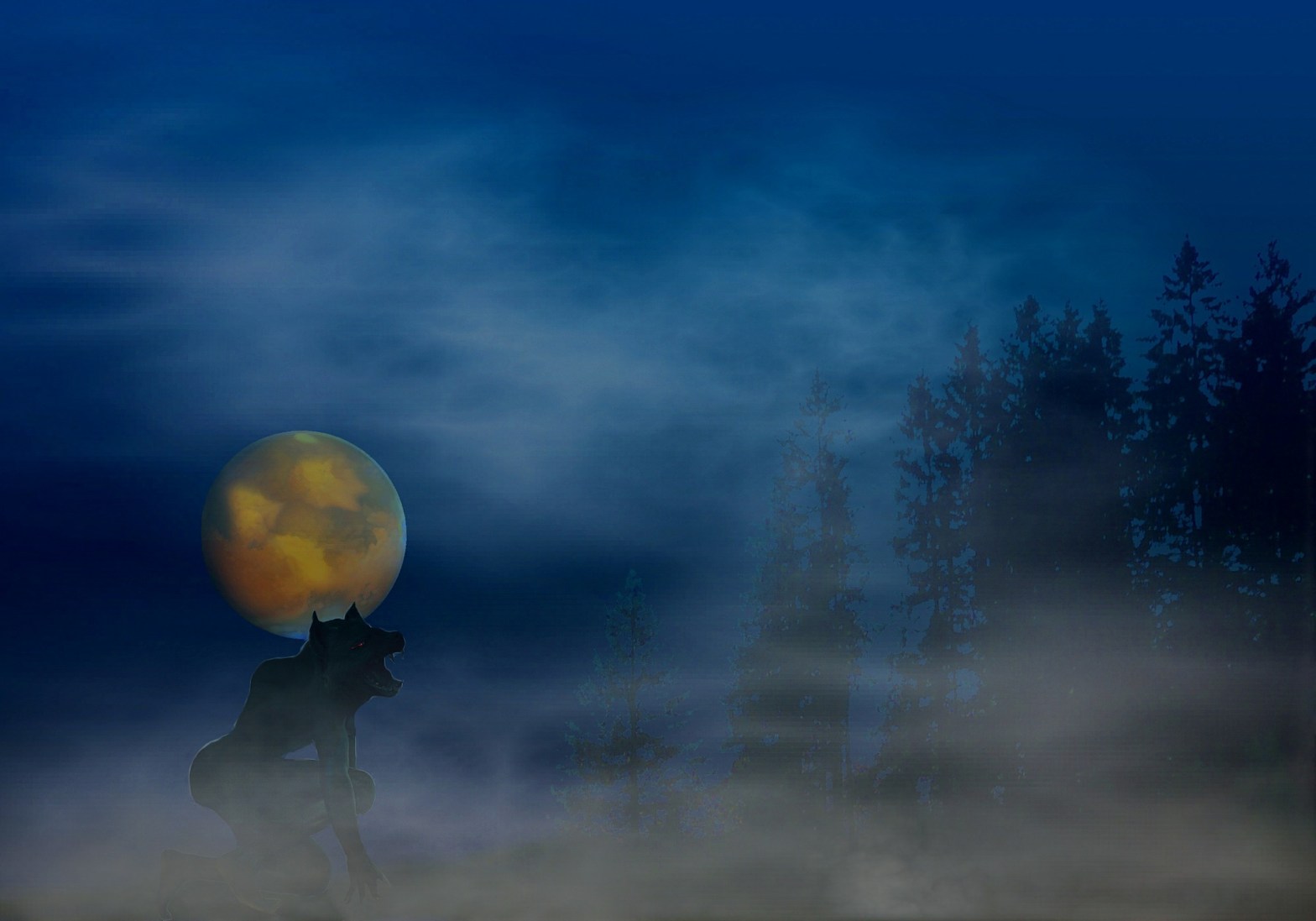
Shapeshifting is one of the popular themes and tropes in many different stories, particularly legends and contemporary movies. Wikipedia defines shapeshifting as “the ability to physically transform through an inherently superhuman ability, divine intervention, demonic manipulation, sorcery, spells or having inherited the ability.” Who wouldn’t want to have this kind of ability, along with the powers that come with it?
Other than werewolves and vampires, what other shapeshifters you should know about?
- The Hunter in the Shadows
This pulp adventure fiction which is the first book of The Thule Trilogy by Stieglitz, Joab takes place in Depression-era Boston. The antagonist is a shapeshifting alien who kidnaps the (alter-dimensional) sister of the protagonist, Anna Rykov, and whose plans could bring about the extinction of all life on earth.
- Surviving Evil
Released in 2009, Surviving Evil (also known as Evil Island) is a horror film about a group of documentary filmmakers who stumble upon a group of aswang in one of the Philippines’ 7,000-plus islands. In Filipino folklore, the aswang refers to various mythical shapeshifting evil spirits such as vampires, witches, viscera suckers, ghouls, and werebeasts, usually dogs, cats, and pigs.
- The Legend of the White Snake
Also known as Madame White Snake, the legend of the white snake is a Chinese legend about a snake spirit that falls in love with a man. The story was first printed in Feng Menglong’s Stories to Caution the World, published in 1624. The legend has it that a boy named Xu Xian vomited some immortality pills into a lake, where the white snake spirit dwelt. She ate the pills, which granted her enormous magic powers. She, therefore, felt grateful to Xu Xian. Years later, the white snake spirit transformed into a young woman named Bai Suzhen and met and later married Xu Xian. The legend recounts the trials Bai Suzhen and Xu Xian faced in their married life. The legend has been adapted into operas, films, and TV series, including the 2011 movie The Sorcerer and the White Snake, starring Jet Li.
- Various Indian films about the Nāgas
The Nāga or Nagi, in Hinduism, Buddhism, and Jainism, are divine or semi-divine deities, or a semi-divine race of half-human half-serpent beings that reside in the netherworld and can occasionally take human form. The Nāga are usually depicted in three forms: wholly human with snakes on the heads and necks, common serpents, or as half-human half-snake beings. They have been a subject of a number of movies, such as the blockbusters Nagin (released in 1976) and Nagina (released in 1986).
- The Terror: Infamy
Premiered in 2019, the second season of AMC’s television series, The Terror, centers on the bakemono, a class of supernatural monsters in Japanese folklore. According to SamuraiWiki, the word itself means “changing things”. A bakemono’s true form may be an animal, such as a fox (kitsune), a raccoon dog (bake-danuki), a badger (mujina), or a transforming cat (bakeneko), and usually either disguises itself as a human and any monstrous form.
- Various Korean dramas about the Kumiho
A kumiho (also called gumiho) literally means “nine-tailed fox” and is a creature that appears in various legends of Korea. The kumiho is similar to its Japanese (kitsune) and Chinese (huli jing) counterparts but is the only one that kills and eats humans. They have the ability to transform into a human being, usually a beautiful woman who often sets out to seduce boys and eat their hearts or livers. In some legends, however, they could sometimes be helpful to humans. The kumiho has been the subject of a number of K-dramas and films, such as The Fox with Nine Tails (released in 1994), Forbidden Love (premiered in 2004), Yobi, the Five Tailed Fox (released in 2007), My Girlfriend Is a Gumiho (premiered in 2010), and Gu Family Book (premiered in 2013).
- Hyenas
Werehynas are the African counterpart of the werewolves of European folklore. They appear in the folklore of North Africa and the Horn of Africa. In Somalia, legend has it that a man named Qori Ismaris (“One who rubs himself with a stick”) could transform himself into a “hyena-man” by rubbing himself with a magic stick at nightfall. By repeating this process, he could return to his human state before dawn. In Ethiopia, it is traditionally believed that every blacksmith, whose trade is hereditary, is really a wizard or witch who has the power to change into a hyena. Werehynas were the inspiration for Hyenas, a 2011 supernatural horror movie, released in 2011, about a widower who hunts a roving clan of predatory cryptohuman hyenas to avenge his dead wife and baby.
- Various X-Men stories
Perhaps one of the most famous shapeshifter in popular culture is Mystique, a comic book character in Marvel Comics’ X-Men. A mutant, Mystique can mimic the appearance and voice of any person by psionically shifting the formation of her biological cells at will. As a shapeshifter, she can alter and rejuvenate her body’s cells and thereby retain her youthful appearance. Mystique has appeared in many X-Men comics, as well as movies such as X-Men (released in 2000), X-Men: First Class (released in 2011), X-Men: Days of Future Past (released in 2014), X-Men: Apocalypse (released in 2016) and Dark Phoenix (released in 2019).







 Alex Writes