
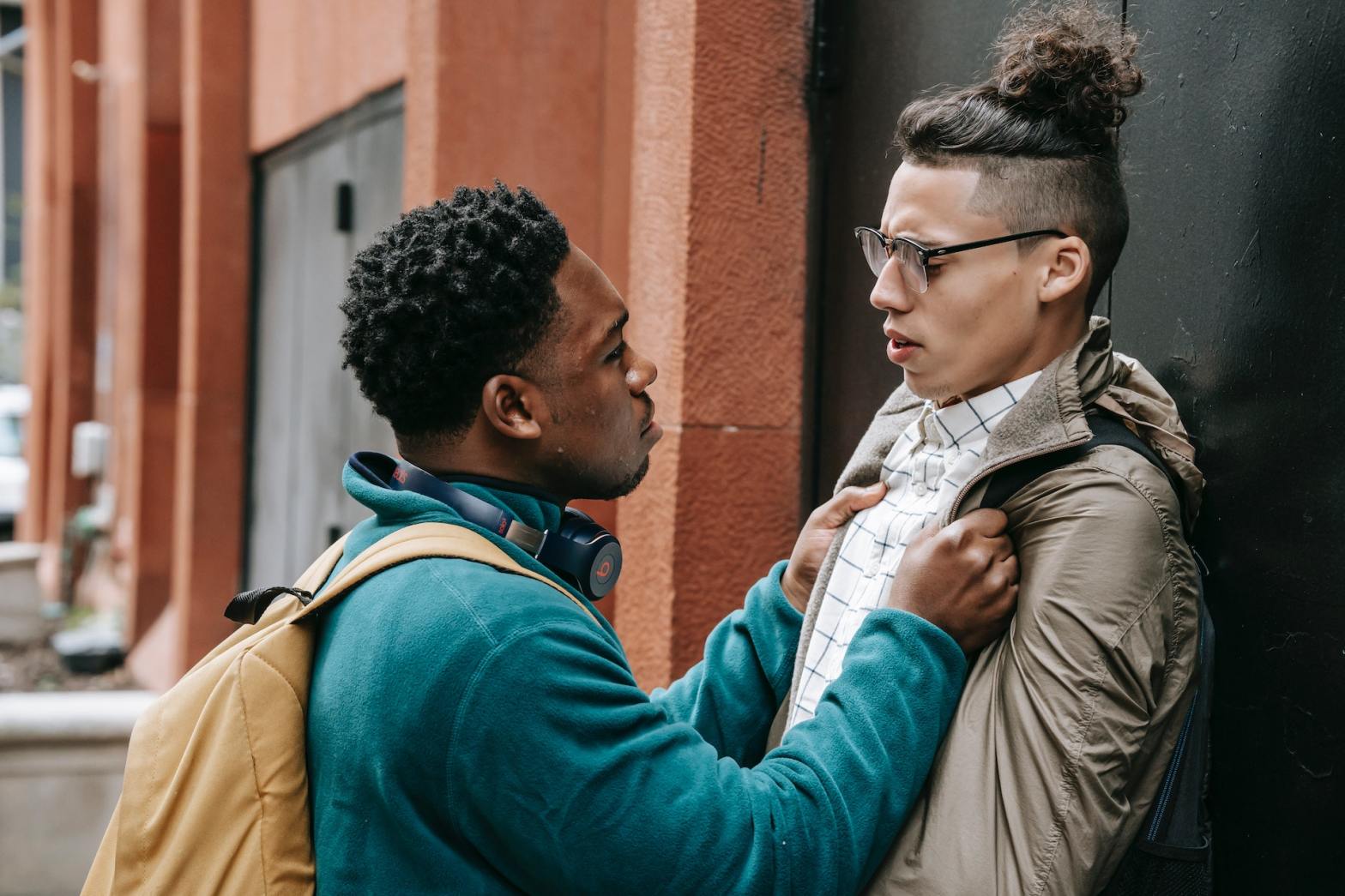
Photo by Keira Burton
Bullies can be found worldwide, and while it’s difficult or even counterproductive to do so, understanding a bully is essential for our society.
There’s no doubt that bullying is a problem, but it’ll be impossible for us to do that if we don’t understand what bullies are thinking. Caroleann Rice’s ladybug children’s book knows much about this subject. Her book “The Ladybug and The Bully Frog” discusses how to stand up to bullies.
It’s sad news that bullying is a growing issue, like a pandemic jumping from one person to another. Bullying happens regardless of status as well. Whether you are at work, at a family event, or school setting, bullying is always happening.
With that in mind, why do bullies bully others? Let’s find out and dive into the reasons for bullies!
Why Do Bullies Use Aggressive Behavior?
Children who bully often act out to get attention because they don’t get enough attention from their parents at home. Kids who are neglected, have divorced parents, or whose parents frequently use drugs or alcohol can fall under this category.
Older siblings could also bring on the issue. Older siblings are more likely to bully a younger brother. This behavior may stem from being bullied themselves, and they do it to feel less vulnerable or powerful. Furthermore, a mature role model may be a bully.
These mature role models include coaches, parents, teachers, relatives, etc. Frequently, the parents are angry, unable to handle conflict healthily, or are bullies themselves. Many children learn this behavior in their households, later becoming bullies.
Fortunately, this type of learned behavior can always be unlearned. However, it’s important to remember that some children are naturally dominating, impulsive, and aggressive. Their behaviors aren’t always indications that they’re bullies.
The Different Kinds of Bullies
Bullies abuse, use, and dominate people. They don’t have empathy or forethought, and they despise the vulnerable. They target weaker kids and take advantage of them.
People who are bullies often don’t take any accountability for their actions. They’re hungry for attention and power, like the bully frog in Caroleann Rice’s ladybug children’s book. Numerous platforms that raise bullying awareness have helped identify the different kinds of bullies, each with various reasons for choosing to bully people.
Understanding a bully entails that we identify some of the types of bullies out there, and here they are:
• Detached bullies organize their assaults and are amiable to everyone except their targets.
• Bullied bullies get a sense of relief from bullying helpless individuals and overpowering them
• Hyperactive bullies lack social skills, behave improperly, and occasionally become physical
• Social bullies possess low self-esteem and use meanness and slander to control others
Most bullies usually can’t grasp how misguided their actions are. They don’t even know what the one being bullied feels. While most bullies are also going through something difficult, bullying is still unacceptable.
Opportunities That Arise from Demystifying Bullies
We can now understand that every kind of bully has a weak foundation since a magnifying glass has been directed toward a previously obscure item.
Folks can take power away from them by demystifying the bully and realizing that most of these kids put up an iron front while utterly terrified of their flaws being exposed.
Now, bullied children can overcome their fears and rise above them. When people comprehend the bully’s genuine nature, fears, mental limitations, and hopeless need for power, they can have a better self-mastery.
When told they’re bullies, a youngster’s thoughts will shift after understanding that the bully attitude is faulty and cowardly. Once this happens, the feeling and conduct follow, changing what we portray and our body language, transforming the paradigm.
How Can Families and Schools Stop Bullying?
Bullying is a problem that is getting worse and is harming our communities and schools. Online bullying is becoming more prevalent, increasing the number of bullied and tormented youngsters, especially among older kids. Bullies may be able to conceal themselves online, but the objects of bullying are undoubtedly unsafe.
To help stop bullying, families and schools can start by building a school culture that celebrates and embraces diversity. There should be zero tolerance for behaviors tied to bullying. Social and Emotional Learning (SEL) opportunities must also be embedded into the system.
Understanding a bully opens our eyes to the many adverse effects bullying has. Bullying should never be pushed aside and downplayed. Even Caroleann Rice’s ladybug children’s book understands how detrimental bullying can be.
The book focuses on letting Milton, the bully frog, realize the error in his ways using the incredible voice of love. Discover more details about the book by clicking here to visit Caroleann Rice’s website and purchase a copy!
 Alex Writes