
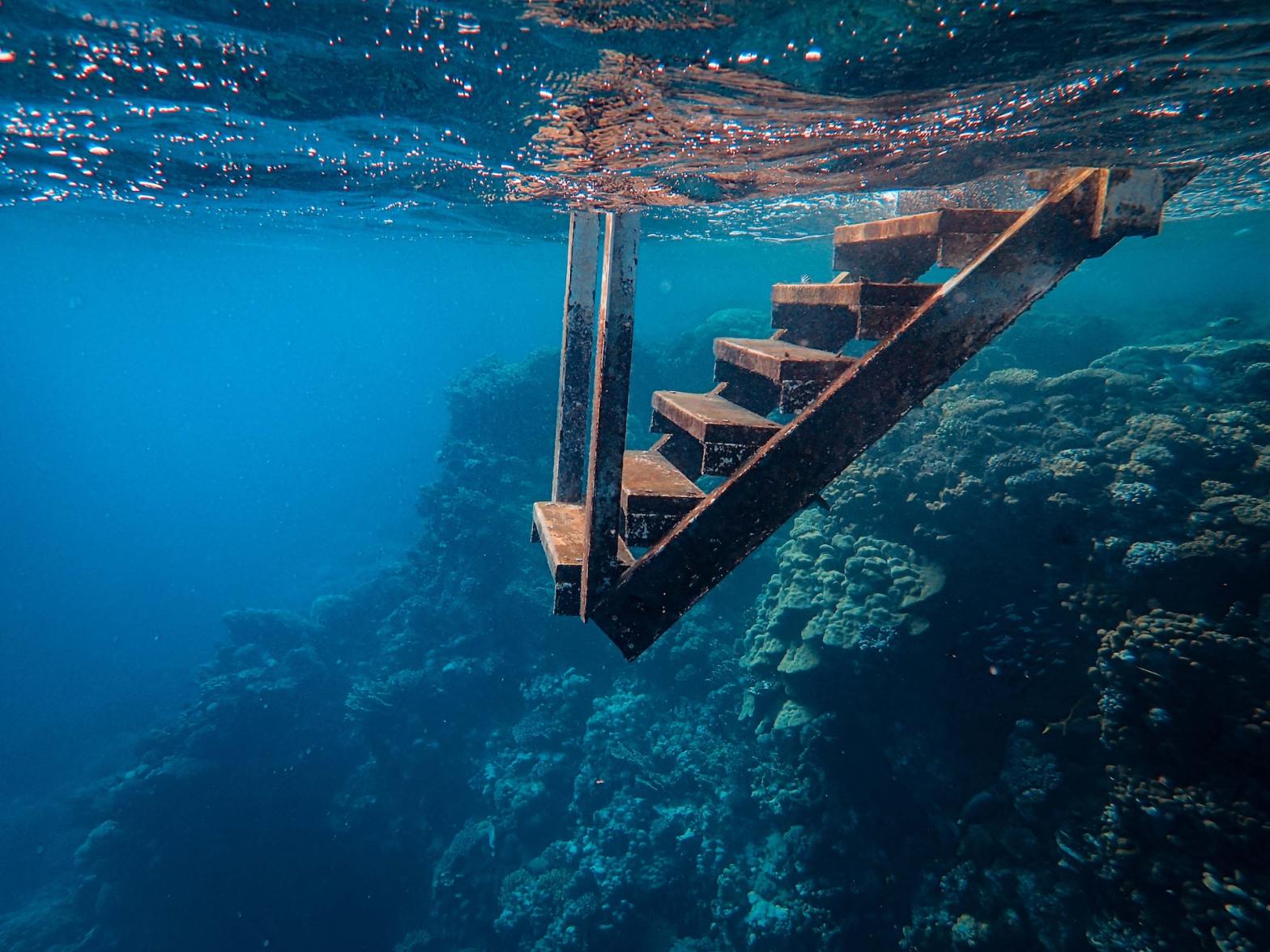
Photo by Francesco Ungaro
Atlantis is a mysterious city buried underneath the waves, and there are many fascinating theories about the wonderful Atlantis.
Kenneth J. Sousa wrote a book titled Man-Dar of Atlantis, where he mixes science fiction and adventure. There is also another book titled Black Menace by Kenneth Sousa, which is just as interesting as Man-Dar of Atlantis. But today, we’ll focus on Atlantis and discuss Black Menace on another date.
With that in mind, let’s take the time to look at six of the most distinguished theories regarding Atlantis and its lost civilization. We guarantee that you’ll be amazed by these theories.
Theory #1: Atlantis Was Formerly Antarctica
The first theory we’ll be tackling today is the one that says Atlantis was a temperate version of what we now call Antarctica. It’s based on Charles Hapgood’s work, whose 1958 book titled Earth’s Shifting Crust even had a foreword written by Albert Einstein.
Hapgood claims that the Earth’s crust moved about 12,000 years ago, moving the region that formed Antarctica from a place further north where it is now. The residents of this advanced civilization lived on this more temperate continent, but they perished when it abruptly moved to its current icy position.
The Atlanteans and the wonderful city were buried beneath layers of ice. Hapgood’s “shifting crust” notion was generally consigned to the periphery of Atlantean ideas because it was developed before the scientific community fully understood plate tectonics.
Theory #2: Atlantis Isn’t Real and was Invented by Plato
Most historians and scientists have concluded that Plato’s description of the mythical Atlantean kingdom was fictitious. It’s arguably one of the most accepted theories about the wonderful Atlantis.
This argument holds that the Greek philosopher created Atlantis as his ideal society and meant the account of its destruction to be a warning about the gods condemning human hubris.
In addition to Plato’s dialogues, none of the many other works from ancient Greece that have survived have recorded accounts of Atlantis. Furthermore, no evidence of such a drowned civilization has been discovered despite recent advancements in ocean-floor mapping and oceanography.
The Black Menace by Kenneth Sousa doesn’t talk about Atlantis, unlike his Man-Dar of Atlantis. Kenneth wrote a fine tale that counters this theory, showing Atlantis is a real city in a world of science fiction.
Theory #3: Atlantis was a Continent in the Mid-Atlantic Swallowed by the Ocean
There was a shift in belief during the later years of the 19th century, mainly that Atlantis had been an actual historical location and not merely a myth made up by Plato first emerged.
Ignatius Donnelly contended that the achievements of the ancient civilizations (such as metallurgy, language, and agriculture) must have been passed along by an earlier advanced civilization. Ignatius further posits this idea in his book Atlantis, the Antediluvian World, published in 1882.
He believed that the ancient people back then weren’t advanced enough to create such technologies by themselves. Donnelly presented a continent swamped by fluctuating seawater that sank in the precise location Plato claimed it happened.
Presuming the Atlantic Ocean was merely a few hundred feet deep, the sinking happened when the two rocks that signified the entrance to the Straits of Gibraltar, called the “Pillars of Hercules,” collapsed.
Theory #4: Atlantis is the Tale About the Minoan Civilization
One of the more recent Atlantean ideas focuses on the Minoans, who lived more than 4,000 years ago on the Greek islands of Thera (now Santorini) and Crete, and were named after the mythological King Minos.
The Minoans were the first Europeans to adopt a written language (Linear A), build magnificent palaces, and pave roads, making them considered to be Europe’s first great civilization. But the Minoans abruptly vanished from history at the pinnacle of their glory.
The mysterious vanishing has encouraged the idea that something cataclysmic event destroyed the empire and is connected to Plato’s Atlantis.
Atlantis is a city that inspires writers to write their novels. Even though Black Menace by Kenneth Sousa wasn’t inspired by Atlantis, his other book Man-Dar of Atlantis, has a premise revolving around the lost city.
The mysteries behind Atlantis might never be uncovered, but we shall never stop contemplating them. We will continue to make theories about the wonderful Atlantis. It’s like a literal “Call of the Abyss,” pulling in scientists, historians, and writers alike.
 Alex Writes