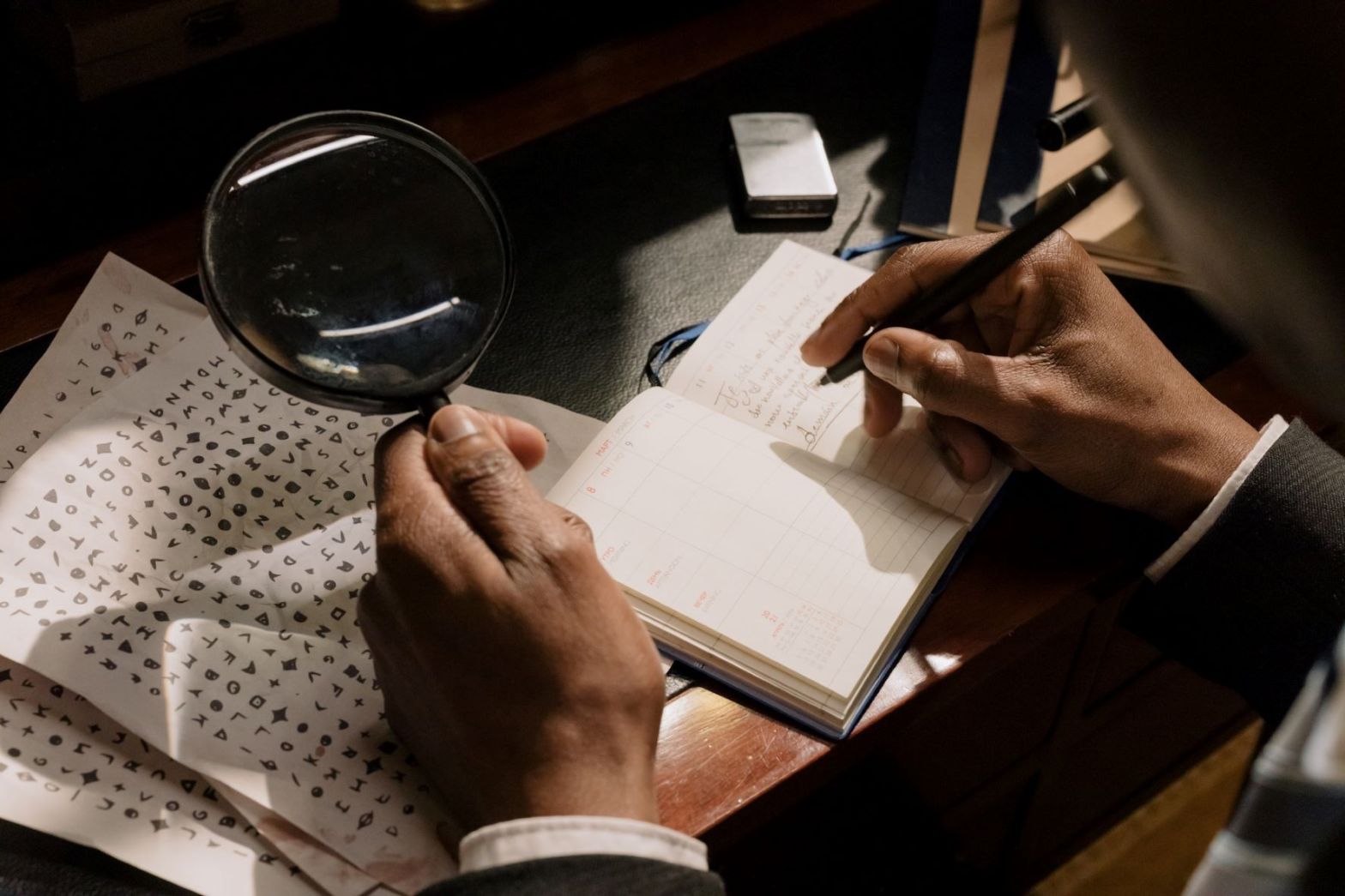
Photo by cottonbro
Brian Clements’ book, a collection of short stories and poems, is thought-provoking and makes sure to give readers ample sustenance for meditation and new perspectives to take.
As one of the 20th-century’s most lauded writers, famous for his dark humor and provocative prose, Kurt Vonnegut once said about reading and writing that they “are the most nourishing forms of meditation anyone has so far found.” He further explained that it is through reading that people can self-meditate with their minds and on the writers’ thoughts.
Good literature allows readers to think about their perspectives relative to the themes laid out in the piece. Still, the best literature gives readers another point of view to work with: the authors’ standpoint.
In his second anthology book, Clements writes a collection of short stories and poems that seek not only to tell a story but to provide a different vantage point and be a bridge for his ideas and the reader’s mind.
The Writer’s Purpose
Vonnegut has spoken about his process for writing, and he has spoken at length about his thoughts on what good writing should be. Still, the most resounding lesson he left for aspiring writers is to talk about the current age, whether through contrasting the time before, commentating on what is happening now, or imagining what future will come because of the present.
Writing can change the world; it changes how people see themselves and communicate with each other. Ideas and points of view are exchanged, and passions are conveyed through writing.
When asked why he writes, Vonnegut famously said, “My reason for writing is unfortunately in line with Hitler’s and Stalin’s: I think writers should serve their society.”
Although his words are somewhat controversial, they have a semblance of truth. A writer should write because they want to tell a story or offer an idea, but it should always be at the behest of serving society. Whether it is by entertaining, teaching, or anything else, a writer should always think of the impact of their writing.
The Brilliance of the Short Story
Like Vonnegut, Clements is a masterful writer of the short story. Short stories are fully developed narratives shorter than a novella but longer than a sketch story for those not in the know. Typically, they take about one sitting, a single read-through, to finish. An advantage of a short story over a novel is its compactness and efficiency: some of the best short stories quickly and inform readers, although sometimes at the expense of characterization, which because of the length, can be lacking.
Short stories give readers certainty, making them want to finish reading the narrative; unlike novels which might be a part of a more extended series, short stories are self-contained and have a clear beginning and an end. For most readers, there is a pleasure in finishing a story and knowing that what issue was presented at the start was resolved at the end (although some examples have more open-ended endings, that is another article entirely).
Short stories are excellent grounds for experimenting. Because of their short length and compressed nature, short stories allow authors to try out new genres and writing styles and sometimes with perspective shifts. For the reader, short stories can be a new way of exploring genres and getting to know some of their features; they also help acclimate oneself to an author and their literary voice.
Reading a short story can make for good stop signs, especially for voracious readers juggling two or more novels a day and discovering that it’s getting too much to bear. Short stories allow for some much-needed rest in-between reads while keeping up the momentum of daily reading.
The writer Edmund Speare said about the short story: “It is just the right length in a world of tumult and hurry; it is a form that presents things succinctly and graphically; it is the type of writing most easily understood by every kind of reader.”
The best quality of a short story, outside of its convenience, is the fact that it condenses a narrative into a short length while at the same time being accessible to all its readers. Unlike a novel, where you have to pore through tens of thousands of words to understand the plot, the short story is more forgiving for the casual or first-time reader, amounting only to a few thousand words.
 Alex Writes