
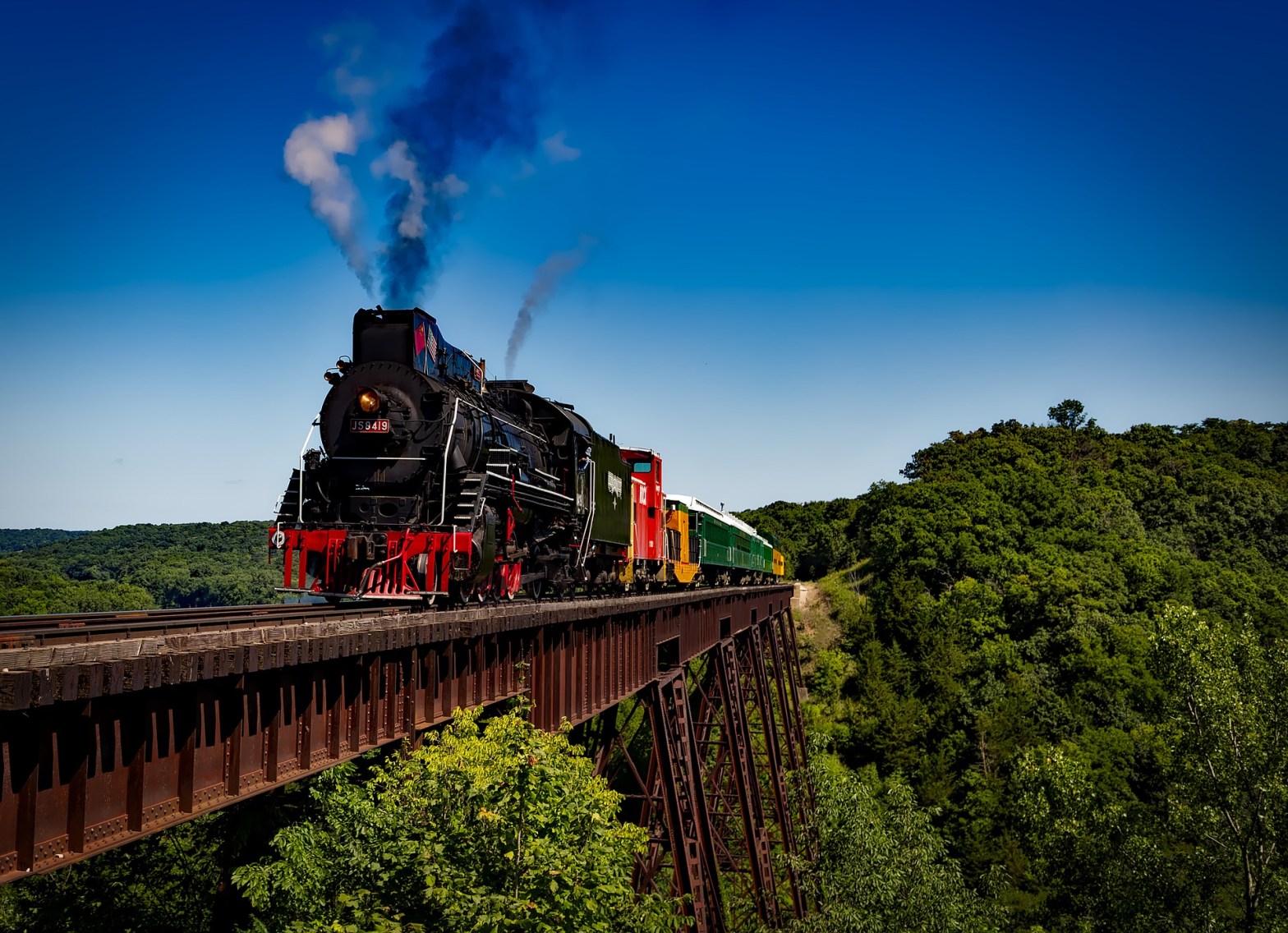
You probably are wondering why we are talking about locomotives, when this blog is all about traveling, literature, movies, and other awesome things. Well, they are typically associated with the aforementioned categories. A train is a good mode of transportation that offers passengers with great comfort, convenience, and fun. Locomotives are also featured in different popular books, such as the Hogwarts Express in the Harry Potter series, Orient Express in the Murder on the Orient Express, and Polar Express in the The Polar Express. They are also being mentioned a couple of times by Sheldon Cooper in the show Big Bang Theory.
You cannot deny that locomotives are interesting; because, they do not only pull trains but they also have amazing types. Moreover, they have different appearances and features that make examining them more amazing. Also, who doesn’t want to go on train rides or railroad trips? It could be the most enjoyable thing to do in this lifetime! With that being said, let us discover the different types of locomotives that you should know.
Steam Locomotives
Steam locomotives refer to the kind of railway locomotive that give out their pulling power via steam engines. They are powered by burning flammable mediums, like wood, oil, or coal, in order to create steam inside the steam generator. The steams advance reciprocating pistons that are link mechanically to the drivers or primary wheels of the locomotives. Steam locomotives always carry with them some water and fuel, which are being placed in the tenders it or in itself.
This type of locomotive was first invented in the early 19th century in the UK. It was being utilized for railway transport from its date of development until the mid-20th century. But in 1902, the first ever steam locomotive by Richard Trevithick, a British mining engineer and inventor.
Electric Locomotives
In contract to the steam locomotives, electric locomotives are powered by electricity with prime movers located inside it. The engines that make use of the fuel often include diesel engines, gas turbine-electric, and more. Furthermore, the electricity that is fuelling this locomotive is from overhead lines, which is energy storage — like a battery, which is found onboard.
There are many electric locomotives that can be found all around the world. In Europe, they have the NER No. 1, FS Class E656, and British Class 91. The Russia and former USSR have the Soviet electric locomotive VL60pk and the Soviet electric locomotive VL-23. Canada has the GMD SW1200MG and ALP-45DP. The US has the Siemens AC S-64, and Bombardier ALP-46. In Asia, they have the China Railway HXD3Ds, Class EF65, and more. Lastly, Australia has the Electric Multiple Units.
Diesel Locomotives
The prime mover of a diesel locomotive is a diesel engine. There are many kinds of diesel locomotives that have been built, which commonly contrast in the methods by which the mechanical powers are transported into their driving wheels. Before Rudolf Diesel manifested his first ever diesel engine or compression-ignition engine in 1898, the railway cars were using either or both gasoline or/and kerosene for power. The diesel-electric powertrain was the medium used that proved the success of the diesel engines.
When most of the affected states of the Great Depression were mending their economies, they started to use diesel locomotives. It is because diesel locomotives have better adaptability and performance than what the steam locomotives can offer. Furthermore, the ČKD ČME3 is among the longstanding and most produced diesel-electric locomotives ever created.
Gas Turbine Locomotives
A gas turbine locomotive is a kind of railway locomotive that has the gas turbine as its prime mover. There are a lot of locomotives developed under this category; most of them differ in the ways on how their mechanical powers are being carried to the drivers. The 44-ton 1B-1 experimental gas turbine locomotive is a good example of it, which was created in 1952 for examination by the United States Army Transportation Corps following the design of Robert Tom Sawyer.
There are different types of gas turbine locomotives, which are the gas turbine-mechanical locomotives and gas turbine-electric. The former utilizes a mechanical transmission to convey the power production of gas turbines into the wheels. Thus, gas turbine-mechanical locomotives were used in France, Sweden, Czechoslovakia, and UK. The latter, on the other hand, makes use of a gas turbine to bring an alternator in order to bring out an electric current to be used in fuelling the traction motors.
 Alex Writes